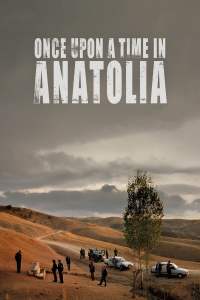
 I don’t think I’d seen a film from Turkey until I recently watched The Wild Pear Tree from director Nuri Bilge Ceylan. That was a masterpiece of a film, leaving me wanting to see more, so up today is some of his previous films. Once Upon a Time in Anatolia follows a group of men on a night out on a mission. A murderer, Kenan, has made a plea deal and is directing the cops through the countryside to where he buried the body. Along for the ride is the police commissioner, Naci, the state prosecutor, Nusret, the medical examiner, Cemal, and a few others. What the film is really about though is the conversations between the characters within the film. It is a character study about how peoples’ outlook on lives shape the way we act and the way we communicate with others. Like Pear Tree, the pacing is such that a lot of people would call this a boring (and long) film, but also like that film, I was fascinated with the individuality of the characters within it. Though there is a definite plot, the director doesn’t just lay it out, or even develop it in a way that we see it as it is happening. We get to know all the characters equally, not emphasizing who we should pay close attention to, because as in real life, all are important in their own way. In fact, a whole picture of what we are actually watching doesn’t become clear until the very end. Watch it closely, with patience in hand, but most definitely watch it. ★★★★
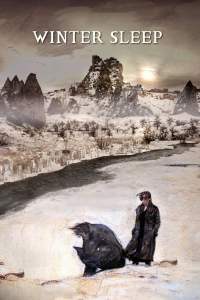 Winter Sleep centers around a sleepy, rural community in Turkey, and primarily focuses on Aydin. Aydin is the only wealthy man in an otherwise poorer village. He owns and runs the sole hotel, which does decent tourism business in the summer, but the film takes place during their slow time. Aydin also owns and leases out several properties in the town. At first the viewer thinks he is a pretty upstanding guy; he’s a former actor and an intellectual, and seems fair in his dealings. The film reveals the true picture of him only slowly as the movie progresses. In fact, it isn’t until the 2 hour mark (of this 3 ½ hour picture) that his much-younger wife Nihal tells him (and us viewers) exactly what his personality problems consist of, and when we hear them, everything falls into place. He is possessive, hoarding his wealth, his trophy wife, and his community prestige above everyone else. While Aydin’s sister realizes these things too, she’s older and is comfortable with floating through life herself. His younger wife fights back more. Seemingly small, minor subplots take center stage as the film progresses, weaving together a masterful, powerful picture. Like in Anatolia, Ceylan examines humanity and each person’s views of their world around them. ★★★★½
 Climates is the first film of his that I wasn’t crazy about. It is pretty simple story about a married couple on the outs. Isa is a man without a goal in life (been working on his thesis for years) and he seems to despair his wife Bahar her career as an art director in television. This, and a previous affair of his, has caused strife in their marriage. She abruptly leaves him one day, and at first, Isa celebrates like a single man. After awhile he starts to miss her though (or at least, the idea of her), and follows her to her latest TV shoot, in hopes to win her back. Taking place over the course of a year, the title has less to do with the changing seasons as it does the changing views of Isa. For me, it was a rather ho-hum picture. I see glimpses of what Ceylan would build upon later on (this film came out in 2006, 5 years before those I’d seen previously), but this is not the masterpiece that those later films would be. ★★
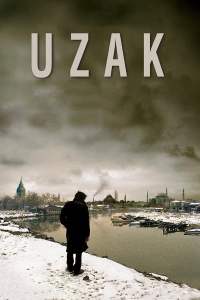 Distant follows two cousins, Yusuf and Mahmut. Yusuf comes from a tiny town whose only source of jobs is a factory, but the factory is letting people go due to an ongoing recession. He’s come to Istanbul to find a job, and is staying with his cousin during the job search. Mahmut is a semi-successful photographer, but he seems to find little joy in his work. Mahmut looks down on his cousin as an unintelligent country bumpkin, but he seems to share a whole lot of characteristics with him. Mahmut derides Yusuf as being unmotivated, but Mahmut seems to be just going through the motions of life himself. Distant becomes a movie about self-inflicted loneliness, due to a complete lack of communication with anyone around us. It was the film that first put Ceylan on the map. Released in 2002, it won a host of awards, including best actor (shared by the 2 leads) at Cannes. Though it is obviously made on a tiny budget and doesn’t have the best camerawork (and lacks the sweeping, “open” feel of Anatolia or Winter Sleep), it is no less profound. Its pace will test your patience, but it is a meaningful and sincere film. ★★★★
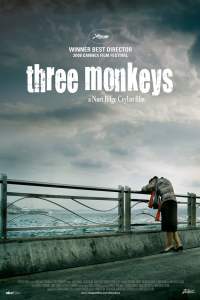 I saved Three Monkeys for last because, reading the synopsis, it seemed to be the most different of these films. I was both right (much more dialogue, faster pacing) and wrong (deeply human and emotional). In the opening scenes, an older man, Servet, a successful businessman, hits a pedestrian while driving. He gets his usual driver, Eyup, to take the fall, promising a big cash windfall when he would get out of jail. While Eyup is away, his wife and Servet begin an affair. Servet continues to provide the family with money, including buying Eyup’s son a car. When he gets out of jail nine months later and sees his wife, he immediately senses something is up, and goes to confront Servet about it. Things blow up when Servent ends up dead, and the ending left me stunned. What I took away was a simple but elegant look at class distinctions, and how dirt gets shoveled downhill to the poorer people in a constant stream. ★★★★½
After watching these movies, it’s safe to say that Nuri Bilge Ceylan is one of my top five directors right now. His films are beautiful pictures about humanity: what makes us tick, what makes us human. Often he takes a pretty simple idea and explores it wholeheartedly from multiple angles. He has an amazing eye for taking what can be a very simple, everyday occurrence and turning it into something profound and contemplative. It seems he usually only puts out a film every 4-5 years, but I’m hoping it isn’t quite that long before his next!

 Jons Movie Takes
3 thoughts on “Quick takes on 5 Nuri Bilge Ceylan films”