 Saw a few of Bergman’s 60’s films recently, including the final two films of his “faith” trilogy (I had seen Through a Glass Darkly quite awhile ago). Winter Light follows a minister suffering from a severe lack of faith. He traces his decline to his wife’s death 4 years prior, and in that time, he’s just been going through the motions. His congregation has dwindled to just a handful of people, he’s been seeing a mistress, and he cannot provide hope to those that come to him seeking help. By the end, though the minister doesn’t find the God he feels he has lost, Bergman does show us that faith can still exist. In typical Bergman fashion though, it isn’t found in organized religion, but rather in the everday man who has suffered in life, yet still believes in something higher than this world. A good film, but on Bergman standards, I found the whole of it rather average. ★★½
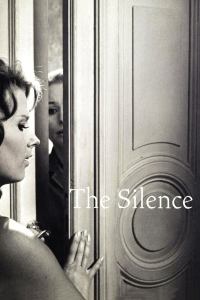 The Silence unfortunately didn’t do it for me, and honestly I didn’t get it. It is about two adult sisters: the older one who is sickly and bed-ridden, and the younger who is slutty and sleeps around with anyone who asks. The floozy also has a young son, who is traveling with the two women in some hotel in a foreign country, where no one speaks the language. While the younger sister is out doing her thing, the son wanders the halls of the hotel, mostly ignored until his aunt engages him here and there, and then the younger sister tries to vie for his attention as well. Besides the obvious conflicted women as leads, there are other Bergman-esque elements, but it also felt very different, and at times I sensed he was getting some influence from the French New Wave which was going on across the sea. I like the New Wave as much as the next guy, but it isn’t Bergman’s forte, and this film just felt aimless, especially the first 45 minutes when, quite literally, nothing happened. By the end, I picked up that much of what the sisters did, they did just to piss each other off, but it still felt lacking. ★
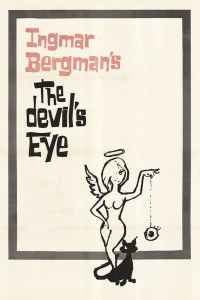 The Devil’s Eye was released just before his aforementioned trilogy, and is a rare comedy from Bergman. With a clear story to follow, it may not be as deep or critically acclaimed as the three films that came next, but I enjoyed it a lot more than the two described above. In it, Satan himself is suffering from a sty in his eye, caused by the faithful virginity of a pure soul on earth. The daughter of a vicar, Britt-Marie is engaged to Jonas and is saving herself for their wedding night. To relieve the pain in his eye, Satan resurrects Don Juan and sends him to earth to seduce Britt-Marie. While Don Juan does so, his faithful servant Pablo puts the moves on the vicar’s wife as well, and both are aided by a demon who has come up from hell to cause some mischief. What Don Juan didn’t expect was to fall in love with Britt-Marie. Of course Bergman would choose to make a comedy of an overtly religious film, but it works all the same. It is certainly entertaining. ★★★½
 All These Women is another comedy, and a downright silly film, but in a good way. Cornelius is a music critic who has come to visit a famous cellist named Felix at his estate, in order to write a biography of him. The film starts 4 days after the start of the visit, where we see Felix is dead and Cornelius is presiding over the wake. In front of the coffin parades a series of women all claiming to be Felix’s widow. The film then takes us back to Cornelius’s initial arrival, where he learns Felix has a wife and 6 different mistresses, one for each day of the week. As Cornelius tries to navigate the irrational and downright crazy household and its eccentric inhabitants, he dodges promiscuous mistresses and jealous lovers, while always hunting for more info on his host. Of Felix, we never actually get to meet him, which is part of the comedy of it all. We see his shoes sticking out the end of the casket, and sometimes get a glimpse of him from behind, but we never hear his voice, and often he is just off camera somewhere. It’s a definite lighter side of Bergman, and proof that he could make fun movies like this had he chosen to do so. And I appreciate that throughout the farce, the critic could never get close to the artist until after the artist was dead (and then tried to write a biography based on hearsay). Well played Bergman. ★★★
 Holy cow, Persona really is as good as everyone says. Despite its praise as Bergman’s masterpiece and one of the best films ever made, I held off on seeing it until I’d seen a good number of Bergman films and gotten a feel for his style. In the end, Persona surpassed all my expectations. The loose story is that of an actress, Elizabeth (Liv Ullman), who has stopped talking, and the nurse, Alma (Bibi Andersson), who has become her caretaker. The doctors think Elizabeth’s condition is neither physical nor mental, but simply due to willpower; she just doesn’t want to speak. As the two women retreat to a seaside cottage, Alma talks incessantly while Elizabeth just listens. The true story of the film only becomes clear much later, and to say anything about it would ruin the experience. Suffice to say, there’s a lot going on in this weird, almost-scary film (it even elicited a gasp from me at one point, though it isn’t a true horror film. At least I don’t think it is, but a lot can be interpreted from it.). It is a wild trip in David Lynch-ian fashion, and I wouldn’t be surprised if he cites it as a major influence. This is one of those films that begs to be watched multiple times. ★★★★★

 Jons Movie Takes