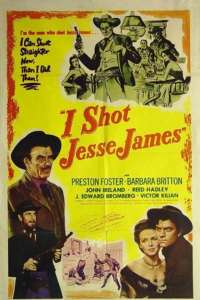
 Samuel Fuller is a director whose raw, often low-budget films were not thought very highly of early in his career, but who gained esteem later. His style is more visceral and was even called crude in their day, but they are definitely compelling films. His directorial debut was I Shot Jesse James, released in 1949. Unlike Dominik’s film The Assassination of Jesse James By the Coward Robert Ford (tremendous film by the way, see it if you haven’t), the actual killing isn’t the big climax, in fact, the murder goes down fairly early in this one. The movie follows Bob Ford. He wants to get out from under the bounty on his head, and sees an opportunity to kill his best friend, Jesse James, to get the clemency offered. He wants freedom to marry his girl, but she no longer loves him, something everyone is well aware of except for Ford himself. When the governor denies him the promised $10,000 reward for James’ death, Ford strikes out to find money to marry somewhere else, first in his infamous traveling show detailing the murder of James, and then in a silver rush in Colorado. Fuller is finding his footing here, but some of the trademarks he would use throughout his movies, like extreme closeups and raw characters that are very un-Hollywood like for their day, are already present. For my tastes, Fuller’s off to a great start.
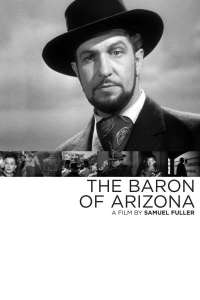 I was pleased to find Vincent Price starring in Fuller’s second film, The Baron of Arizona. This is loosely based on a true story, the story of a man named James Reavis who tried to swindle the government out of the territory of Arizona before it became a state, and he very nearly succeeded. In the film, Reavis has a plan from the beginning, and is as thorough as he can be to bring it to fruition. Knowing that the government will continue to recognize land grants issued in the west by the Spanish and Mexican governments, he finds a parentless girl to doll up as an heiress. After setting her up with a governess, he heads to Spain. There, he spends years infiltrating a friary until he is a welcome member, at which point he gains access to their original records of land grants issued by King Ferdinand VI. He forges a document there, and does so again at a copy in the house of a collector and government official in Madrid. With everything in place, he returns to Arizona to marry the girl he left behind, who is now a grown woman. The rest of the film plays out with the US government trying to poke holes in his claim. The film feels different than his first and later movies, more like a traditional Hollywood western, but still has some of Fuller’s stylistic character. Price would later say this one of his favorite roles. Perhaps that is because it is very different from many of his other films, but you can tell he is having a good time here, and is fantastic in the role. I very much enjoyed this one.
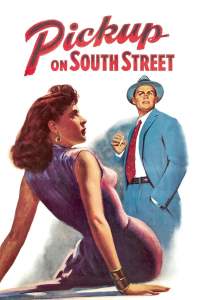 Pickup on South Street shifts to the hustle and bustle of urban New York. A noir film, it begins right away following a thief named Skip McCoy as he robs a young attractive woman on the subway. It turns out Candy was carrying in her wallet a splice of film that held something very much wanted by her handler, her ex-boyfriend Joey. Joey tells Candy that the film held trade secrets from his former employer that he was going to sell for a lot of money, but like a lot of films made in the early 50’s, the real bad guy is the communist party. They want that film, and the rest of the movie features a race against time, with the cops, Candy, and Joey all trying to get to Skip to get their hands on that film. Murder, fist fights, and hard language (for its era) all combine into a thoroughly gripping and tense film. Skip is an unlikely hero, as rough-and-tumble as they get. He does despicable things but Fuller does all that he can to get us to like him, and does a good job of it. I thought Fuller’s raw style was great for the previous westerns I’d seen, but it seems even more perfect for a noir. Great flick.
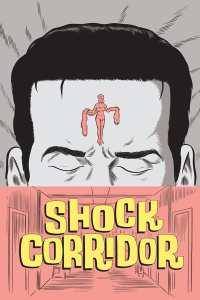 These last 2 films are probably more typical of the type Fuller would become famous for. They are certainly much more shocking than the previous ones. Aptly enough, the first one is Shock Corridor. It’s about a journalist named Johnny who is obsessed with winning a Pulitzer. He thinks his most sure-fire bet is to solve a murder at a local mental hospital, and to do so, he gets himself admitted by convincing his girlfriend to pretend to be his sister, a sister that he has been making sexual advances to. This gets him in the door, but he has to keep up appearances while there, all while locating the three witnesses to the crime and getting them to come out of their insanity just long enough to drop a clue to help him solve the case. Each of the three is definitely certifiable: one thinks he is a Confederate general in the civil war, another (a black man) thinks his is a leader in the KKK, and the third behaves like a child. As Johnny gets closer to the answer, he gets further from his own personal ties to sanity. The film is much more raw than Fuller’s earlier pictures, and very edgy for 1963, dealing with subjects you didn’t see much of back then.
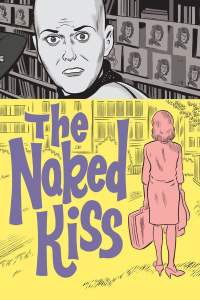 If you think a sharp look inside a mental hospital would shock the high minded in the 60s, it has nothing on The Naked Kiss. Kelly is a prostitute on the run from her pimp, and finds herself in hiding in a small town. She’s only there for a minute when she runs into a police chief named Griff, who recognizes her for what she is immediately, and wants her out of his quaint little town. She stays anyway, renting a room nearby and beginning to volunteer at the local children’s hospital. Kelly meets Grant, a wealthy man and Griff’s best friend, and the two fall in love despite Griff’s objections. Kelly tells Grant about her past and he doesn’t seem to care, but he has his own dark secrets. Kelly walks in on Grant molesting a little girl, and he admits that he loves Kelly because they are both deviants and can share their sicknesses together. A disgusted and enraged Kelly kills Grant, but then is sent up for murder charges by Griff, who doesn’t believe her story. Despite all the good she’s done in her short time in the town, finding people to come forward to speak for her, now that her past is all over the papers, becomes an impossible task. Gritty and unflinching, this film was obviously way ahead of its time. Constance Towers is incredible as the (now cliché) hooker with the heart of gold, and the story, direction, and camera work are all top notch. Great classic film.

 Jons Movie Takes