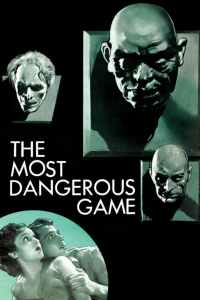
 A man ends up in a mortal hunt, being chased by a madman who leads a game where he hunts humans instead of animals. This tale is pretty common today, but it got its start in The Most Dangerous Game, a short story from 1924, and then the film version of the same name in 1932. Bob is on a luxury yacht when it crashes on a tiny island off the coast of South America. He is the only survivor, but he is taken in by the owner of a mansion on the island, Count Zaroff, and finds survivors of similar wrecks already living in the house. The grisly game unfolds from there, in spectacular fashion. For a 30’s film, the movie has excellent thrills and suspense, and being pre-Hollywood code, it a bit on the gruesome side as well, complete with human heads displayed in Zaroff’s trophy room. A very entertaining, short film (just over an hour in length), it fell into public domain quite awhile ago, but do yourself a favor and make sure to look up a version that was restored properly, and forego one of the ones that has been “colorized.” This film looks best in glorious black and white.
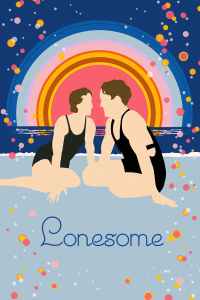 I’m sneaking Lonesome into this set of pictures, even though it came out in 1928. Close enough, and I wanted to see it. Like a lot of movies made in 1928 and ’29, it is mostly a silent film but had a few scenes of dialogue added to take advantage of the talkie craze. Lonesome is a film about two single people living in the hustle and bustle of New York. Jim and Mary are surrounded by a hectic, modern world constantly in a rush, but though they have people all around them, they are each lonely. All of their friends are coupled off, leaving them to be the third wheel if they go out. They each see an advertisement for a carnival day at the beach, and head there for some fun. They run into each other there and hit if off right away. They spend a memorable day together, but are separated near the end, not knowing anything about each other, other than a first name. In classic cinema fashion, they return to their individual homes, only to find their apartments are down the hall from each other. A classic love story, with all of the elements of a film of this era, but with genuinely nice, artful moments too. When they are separated, Jim and Mary are engulfed in a sea of people, all cheering and having fun, throwing streamers, involved the gaiety of the day, but the two of them are each as hopeless as a person can be, striving to find each other. Glenn Tryon as Jim is particularly good, with a more varied, nuanced acting style than what you typically see in silent movies. The film had some nice other aspects too, including some color added in various scenes to emit emotion, such as blue-tinted scenes to show moonlight and love, and in other spots, color added to the film itself to enhance the moment, like the lights and colored balloons of the carnival.
 From 1939, Stagecoach is a renowned movie for a lot of reasons. It is the first western director John Ford made in the sound era, the genre in which he would later become synonymous. It is the film that catapulted the western genre from “B” movie status back to mainstream success. And it also launched John Wayne’s career as a leading man. The film focuses on a ragtag group of strangers as they ride a stagecoach from one western town to another, under the constant threat of Apache attack. There’s a disgraced saloon girl, a woman looking for her union soldier husband who is stationed out here, a drunk doctor, a traveling salesman, a corrupt banker, a gambler, and of course, John Wayne as a rancher out for revenge on the men who murdered his father and brother. John Ford had been watching Wayne ever since using him as a prob boy on earlier pictures (under Wayne’s real name Marion Morrison), and knew he had something special. Though he was paid the least of all of the male actors in Stagecoach (which, among others, starred one of my mom’s favorite old actors, Thomas Mitchell), John Wayne steals the show and the camera eats up his charisma. Though not without its stereotypes, this movie is tremendous, and just as exciting as any film made today. The final gunfight between Wayne’s character and his enemies, drawn out in tight suspense, is pure movie magic.
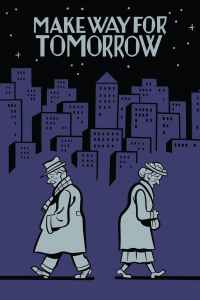 Make Way for Tomorrow is a lovely, funny, but ultimately sad film about aging and the forever-turning wheel of time. Bark and Lucy are an old married couple who have lost their house to the bank. Unfortunately their kids don’t have enough space to take both in together, so Bark goes with one daughter and Lucy goes with their son, 300 miles away. While the film has a lot of humor, good humor too and not the corny, dated kind, it plays out as a tragedy. All of the kids feel put out, and no one wants the burden of taking care of their parents. The youngsters don’t want their daily lives interrupted, and they keep trying to pawn off the old folks on other people, such as their own kids, the remaining sister (who has a big enough house to keep both together, but whose husband has forbidden it), and even strangers. From an outsider’s perspective, they are awful people, but in a terrible way, it is easy to see how it can happen. Everyone is wrapped up in their own lives, same in 1937 as it is today, and no one wants to change those routines, even to help out a parent. When Lucy finds out that her son is considering putting her in a home (something she hates the thought of), she broaches the subject to him as her own idea, so as to spare him the pain of bringing it up to her. Parents will always protect their kids, even if the reverse isn’t always true. When the first daughter decides to send dad off to California, further separating the old married couple, they spend a final day reminiscing about their life together. Thomas Mitchell shows up in this film too as the son, but the leads of Victor Moore and Beulah Bondi (Mrs Bailey in Its a Wonderful Life) are the real showcase. Even now, I think back to the final scene with Bark and Lucy saying their goodbyes at the train station, not knowing if they’ll ever see each other again, it hits me. A wonderful film.
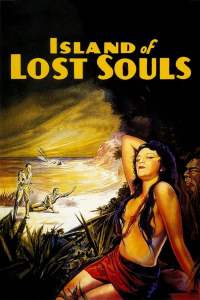 Island of Lost Souls is an old 1932 horror film, based on the HG Wells book The Island of Dr Moreau. In it, Edward Parker finds himself stranded on an island with gruesome looking inhabitants and a scientist named Dr Moreau (played by younger Charles Laughton). Parker finds out that the people aren’t people at all, but animals that Dr Moreau has “treated” with medically advancing evolution techniques, turning them into human-like beings. Dr Moreau introduces Parker into the exotic and beautiful Lota, who it turns out was also once an animal, to see if they will mate and what will come of it. In the meantime, Parker’s girlfriend Ruth finds her way to the island to rescue him, and this leads to the humanesque people rising up against Moreau. The methods pursed on screen by Moreau are very macabre and only made it out because of the pre-code time period. Though Wells himself hated the film, thinking it relied too heavily on the horror aspects rather the philosophical ideas he intended, it is a very good film with more thought-provoking ideas than your average run-of-the-mill horror flick.

 Jons Movie Takes