 Arctic is an incredible survival film starring Mads Mikkelsen. An almost-unnamed man is barely surviving in the harsh arctic landscape, the seemingly only survivor of a plane which initially carried who knows how many. We don’t know how long he’s been there, but it is implied that is has been quite awhile. Finally he hears a radio signal of someone close, and spots a helicopter. When they see him, they attempt to land, only to crash themselves. The pilot dies but a woman survives, although she is comatose and only just hanging on. Our main guy hangs out for a couple days, in hopes a search crew will come looking for the helicopter, but no one does. Thankfully that helicopter was carrying some fresh supplies, including a detailed topographical map of the area, and our survivor plans a trek to a base a couple days away. He heads out across the harsh environment, carrying the helpless woman, whose condition is worsening, behind him on a sled. Along the way he faces hungry polar bears and a deteriorating winter. A harrowing film that proves you can have a gripping and tense movie with almost no dialogue to aid you.
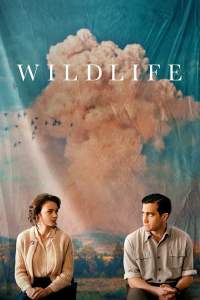 Wildlife is indie film regular Paul Dano’s directorial debut. It stars Jake Gyllenhaal, Carey Mulligan, and Ed Oxenbould as a family living in Montana in the 60’s. Seemingly the all-American family, there are problems under the surface. Jerry can’t hold a job, and Jeanette resents him for it. When Jerry abruptly announces he’s going to go off to fight the wildfires plaguing the area, Jeanette has a bit of a mid-life crisis, starting an affair with a local businessman. Jerry and Jeanette’s son, Joe, is witness to all of the craziness. Dano shows elements of his indie film acting career behind the lens, and there are bright moments, particularly with Mulligan’s and Oxenbould’s acting, but I’m not sure this is a great movie. There are several instances where it seems Dano is just trying too hard, such as several long, slow panning shots, which happen with enough frequency that it becomes a bit much by the end. Still, a solid first film.
 Columbus follows a young woman, Casey (Haley Lu Richardson), a recent high school grad working at the local library. She’s a bit of an architect buff and may have gone to college to study it, but instead has chosen to stay in the little town of Columbus, IN, to watch after her mom, a recovering meth addict. She was planning on seeing a well-known architect who was giving a talk at the local university, but he ends up in coma, and Casey meets his estranged son Jin (John Cho) who has come to be nearby. The two strike up a relationship, and explore their complex feelings about their parents. A fairly simple-sounding film, and it is for the most part. It has a really beautiful, quiet, slow-paced way about it, just like the small town setting it sits in. Even the camera work has this long view, “take it all in” kind of approach, with many scenes set up so we see our characters walk in and out of view, and not a lot of closeups. Sometimes whole conversations take place without any camera movement, placing emphasis on the scene in its entirety and not just the dialogue going on in front of us. Fantastic stuff for movie lovers, proving that richly detailed movies don’t have to be complex.
 On the Basis of Sex is a biography of the early career of Ruth Bader Ginsburg, with Felicity Jones in the lead role. It follows her struggles as a young law student, one of only a handful of women in the Harvard Law program in the 1950’s, and afterwards having a hard time finding a job as a lawyer in a profession dominated by men. The film then shifts to her life in the ’70s, where she is still fighting the system. It opens up when her husband Martin (Armie Hammer), a tax lawyer, brings to her attention a case where a man has been denied a tax deduction for a caregiver for his ailing mother because he is a man, because at the time, the credit could only be claimed by women. To this point, Ruth has been unable to undo laws that upheld sex discrimination, but now she sees a chance to fight one where a man is being discriminated against, and in doing so, prove that sex discrimination is unconstitutional, thus forever changing the landscape for women in the country. The criticisms of this film are mostly that it is too formulaic, and it is that, burdensomely so at times, but if a film’s purpose is to entertain, this one does that. It is emotionally moving in all the right spots.
 Us is the most recent thriller from Jordan Peele following Get Out from a couple years ago. In a similar fashion, he takes an outlandish, almost silly premise and makes it terrifyingly great. It begins in 1986, with a young girl going through a house of mirrors and seeing herself, a true copy of herself and not just a reflection. Years later as an adult, she and her husband bring their family to the same beach on vacation, and that night the town is attacked by twisted doppelgangers of all of its citizens. Not short on suspense and downright scary at times, it is a refreshing and delightful thriller, with a tremendous ending that doesn’t disappoint.

 Jons Movie Takes
3 thoughts on “Quick takes on 5 films”