Going to look at some films by the classic French director and screenwriter, Jean-Pierre Melville. The only film of his I’ve seen before was Army of Shadows, which was a slow burn but ultimately satisfying. Going to start with some of his earlier films, and then some later ones made after he found success.
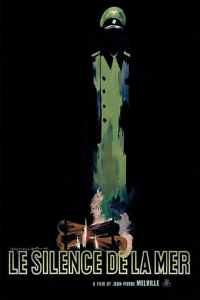 Le silence de la mer (“The Silence of the Sea”) was Melville’s first film, released in 1949. It is an anti-war film based on the underground book of the same name, which was popular among the French Resistance. It takes place in 1941, when a German officer is quartered in the home of an older French man and his adult niece. The officer is not a warmonger at all, and was a music composer before the war. Every evening the officer comes into the sitting room of his hosts, and talks of music, art, humanity, and his dream of France and Germany coming together and blending their wonderful history of culture into a great society. His talks are met with silence, the old man and woman never speak a word, and don’t even look at him. They cannot openly show their hatred for him and the Germans, so their only viable protest is total silence. The German’s expectations of a brighter future are shattered when he goes to meet with his fellow officers one day and their talk isn’t of unification, but of the total dominion over France and the crushing of her spirit. He returns to the family to bid them goodbye; since he cannot live without hope for a better future, he is transferring himself to the front lines. The film is choppy at times, and you can tell it was made by an inexperienced filmmaker, but all directors should hope for such a profound and wonderful first picture. There are wonderful moments of quiet tension, love, hope, and ultimately deflation, often with only sparse narration to guide the viewer. Beautiful film.
 After renowned artist/playwright/poet/designer/everything Jean Cocteau saw Melville’s first film, he contacted him about doing a film version of his book Les enfants terribles. The film came out in 1950, and honestly, this was a tough one for me. The title means literally “the terrible children,” and these spoiled young adults are impossible to root for. Paul is a sickly young man who is cared for by his older sister Elisabeth. Elisabeth has an unhealthy amount of love for her brother, if you know what I mean. In juvenile fashion, she masks her adoration with scorn, and Elisabeth and Paul in return ridicule each other relentlessly. When Paul does fall in love with a girl, Elisabeth thwarts the relationship. I did like the climactic ending, but for most of the film, Elisabeth is such a terrible person that I couldn’t enjoy the movie at all. She goes through life only caring for herself. She marries for money, and doesn’t mourn her rich husband when he dies in a car accident, though she does spend a lot of time making sure her black veil is becoming on her in the mirror. Her and Paul hardly even mourn the death of their mother. Also unbalancing the film is the constant narration (provided by Cocteau himself) telling us what we are seeing on screen. A dud for me.
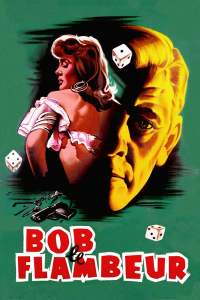 Melville saved some grace with Bob le flambeur (“Bob the gambler”). It’s a great French film noir piece and is often called a precursor to the French New Wave which was about to take the world by storm (this film was released in 1956, just a couple years before Truffault’s The 400 Blows and Godard’s Breathless). Bob is an aging, down-on-his-luck gambler who laments the current state of the mob, saying they are no better than swine. He hangs with other former hoods and even has a local cop he can call a friend, because he saved the cop’s life many years ago (or did he save his friend from doing life for killing a cop? Even the cop doesn’t know for sure). Bob is about to lose his last dollar when he hatches a plan to rob a casino on the day of the Grand Prix, when the safe is apt to have more than 800 million francs in it. Part gangster film, part Oceans 11 (a few years before there ever was an Oceans 11!), this is a fantastic film with grit, suspense, and yes, some humor too. Everything you want in a classic heist film.
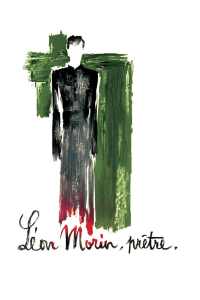 Léon Morin, Priest is one of those films where I choose to view it in a way the director did not intend, and because of that, I enjoyed it a lot more. Played by French New Wave icon Jean-Paul Belmondo, Morin is a young, good looking priest in a town in France during the occupation of World War II. Most of the men in the town are either off to war, in camps, or underground fighting for the resistance, leaving a lot of sexually deprived women at home. Barny (Emmanuelle Riva) is one such woman. She doesn’t believe in God but stumbles into church one day to goad a priest during confession. Morin doesn’t bite, but does invite her to his room in the evening. She goes to seduce him, but over the course of the film, she comes to know God and becomes very devout by the end. The viewer thinks at any time the priest will give in and the couple will have sex, but it never happens, though he does seem to enjoy lording his good looks over Barny and the other attractive young women he invites to his residence. Melville, himself a Jewish atheist, has said in interviews that he intended to show that Barny only converted to get laid, but I saw a film that showed a priest who never strayed from his faith, who brought a woman and her children to God, and while he did not have all the answers for the questions this new believer had for him, he did always direct to God and never wavered. A deeply religious film in my experience, even if Melville didn’t intend it so.
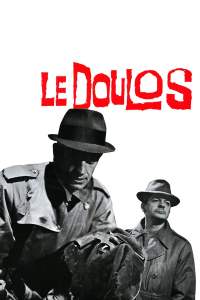 Le Doulos (literally “the hat,” but police slang for “informant”) again stars Jean-Paul Belmondo as Silien, a man whose two best friends are Maurice, a hood, and Salignari, a cop. Maurice is recently out of jail and is visiting an old crook friend of his, Gilbert, who is going over some jewels recently stolen. Though the 2 are friends, Gilbert had killed Maurice’s girl while he was in jail, so she wouldn’t talk to the cops, and in retaliation, Maurice kills him. So sets of a chain of events in glorious mobster fashion. There are double crosses, gun fights, robberies, and in the end, loyalty to your fellow crooks (as long as they haven’t wronged you). Really entertaining neo-noir, a genre that Melville would probably become most famous for in future films.

 Jons Movie Takes
One thought on “Quick takes on 5 Melville films”