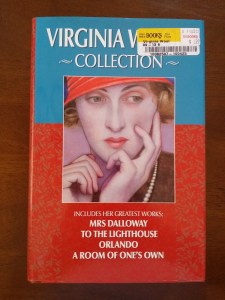
Sometimes you just have the read a book at the right time to really enjoy it, otherwise you might not. I firmly believe that is the case for To the Lighthouse, by Virginia Woolf. This is the third of her books I’ve read. I found Orlando and Mrs Dalloway fairly boring, but for some reason, I really dug this one, though written between those first 2 books, it is much like them in style (especially compared to Mrs Dalloway). It is very introspective, in fact there is little dialogue and even less “action,” with most of the book taking place inside its characters’ minds. Even so, it is beautifully written and engrossing from page to page.
The book follows a family and their circle of friends, living at a summer home on a coast. The book starts inside the head of Mrs Ramsay. She is kind and patient to those around her, in start contrast to her bullying husband. Mr Ramsay is a somewhat well-known philosopher but he is egotistical and downright rude to others. They have many children together, including the youngest, James, who wants to visit the Lighthouse seen from the window. Mrs Ramsay promises to take him, but over the course of a long day, Mr Ramsay continually denies the request, mostly because he doesn’t want to be put out. Other guests float in and out of the day, including Lily, a talented but unsure painter.
The second part of the book jumps ahead 10 years to another day. Now after World War I, several people have died, including Mrs Ramsay, but the friends return to the summer house and sort of pick up where they left off. Mr Ramsay is finally taking his teenager son James to the Lighthouse, but James’ fear as a youngster has turned into hatred as a young man, and he promises himself that he will kill his father if he so much as makes one harsh comment. However, near the end, he is actually praised, for perhaps the first time in his life. Lily is also finally able to overcome her self-doubt and finish the painting she started 10 years earlier.
That is really most of the story in a nutshell, but as I said, the devil is in the details. The doubts of Lily, the patronizing attitude of Mr Ramsay, and the jealousy of James are all carefully described in Woolf’s melodic, lyrical prose. It falls just this side of stream of consciousness writing, which is good for me because I typically do not like those books. I really enjoyed this one though. It is beautifully written and has a quiet suspense too. For much of the book, it felt like the women were colorful and intriguing, and the men were all one-dimensional, but Mr Ramsay redeemed himself and his sex in the end. After feeling let down after the first two Woolf books, I feel like I finally see what all the buzz has been about for the last hundred years or so. Truly fantastic writing.

 Jons Movie Takes
One thought on “Beauty and lyricism found in Woolf’s Lighthouse”