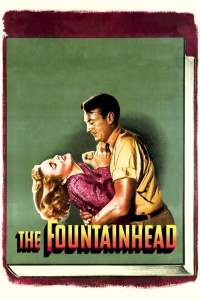
 Rarely does a movie live up to the book it was based on. I read Ayn Rand’s The Fountainhead a little while ago, and absolutely loved it. When the film version was made in 1949, they obviously had to cut a lot of material (the book was over 700 pages, while the movie clicks in just under 2 hours), but they made the right decisions, and the film faithfully conveys the intent and character of Rand’s work. Gary Cooper portrays Howard Roark, a determined and self motivated architect who will only design and build modern buildings to his own standard, and will not compromise even if it means losing a commission when he is all ready struggling financially. The world tries again and again to tear him down and force him into compromising his ideals, but he refuses, and finally is able to overcome. A brilliant film with outstanding acting. I urge you to see it so you can fall in love with the story, and then go read the book for the more detailed attention to the characters and struggle that only it can portray.
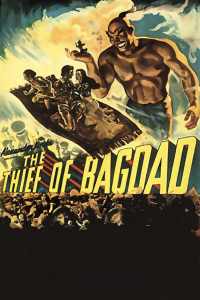 The Thief of Bagdad from 1940 (and the original from which it was based, in 1924) is a major influence for the Disney Aladdin film, though the Aladdin character is split up into two people in this film. The movie is about Ahmad, the young sultan of Bagdad, whose kingdom is stolen from him by his vizier, Jaffar. With the help of a local thief, Abu, Ahmad flees to the city of Basra, where he sees and immediately falls in love with that city’s sultan’s daughter, the princess. Jaffar ultimately comes to Basra to marry her too, and uses his sorcerous powers to win over the sultan there. Many adventures follow, including, of course, a genie and a flying carpet. It is an enchanting film, with some heavy hitters behind the camera, including producer Alexander Korda and directors Michael Powell and Ludwig Berger, among others. It won a few awards at the Oscars, mostly relating to its cinematography and special effects, for its use of blue screen (first in the business) in detailing the giant genie, the carpet and magic horse flying around above the city, etc. There is a touch of the wide eyes over-acting (by today’s standards), but that can be forgiven for the day it was made, and the whole presentation is still beautiful.
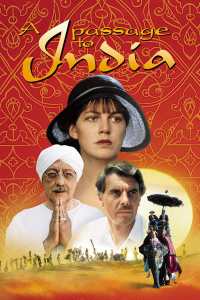 A Passage to India was David Lean’s last film, from 1984. The director who brought us Lawrence of Arabia and The Bridge on the River Kwai (and my personal favorite, Brief Encounter) faithfully adapts E.M. Forster’s novel to the big screen. Miss Quested and Mrs Moore are two English ladies newly arrived to India in the 1920s. Quested is there to see her fiance, Mrs Moore’s son Mr Heaslop. The family meet a well respected local doctor, Dr Aziz, who takes them on a picnic to the some caves that are a local hotspot. There, Miss Quested loses her mind and accuses Aziz of attempted rape, and a trial ensues. The film does an excellent job of showing the political turmoil enveloping India at a time when the people are crying out for independence from England, and Aziz’s trial becomes a metaphor for it. The movie is excellent, with David Lean’s vast, sweeping vistas and beautiful sets pulling you in and making you feel as if you are there, but I did enjoy the book a little more. In the book, the scene on the mountains is very ambiguous, and we don’t know if Aziz is truly guilty or not, whereas in the film, he is clearly shown away from Miss Quested. Still, a few extra scenes in the movie do allow us into Miss Quested’s head to get a glimpse of what maybe caused her to make her claims. The film was a huge success and nominated for 11 Oscars, though it lost a bunch of those to Amadeus, which is no great shame since that too is a great film.
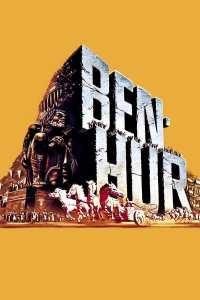 How can a purported movie lover make it to age 39 without having seen Ben-Hur? I finally remedied that this weekend. The grand epic from 1959 starring Charlton Heston is a movie that takes place in the time of Jesus Christ, and while He is a secondary actor usually off-screen, this film obviously follows Ben-Hur, a local Jewish aristocrat. Ben-Hur accidentally kills a Roman governor and is sentenced to slavery in a ship’s galley, and so sets off a chain of events that leads to one of the most heralded films of all time. In no way could I write a short synopsis of a 3 ½ hour film, so instead, I’ll wow you with the stats of its production (lifted from wikipedia). Pre-production of over a year, 8 months of shooting (12-14 hours a day, 6 days a week), followed by another 6 months of post-production. 10,000 extras, 200 camels, and 2500 horses. The wardrobe staff alone consisted of 100 fabricators, and another 200 artists and workman made all the statues and ornamental architecture. It had the biggest budget of any film before it, and the largest sets. And amazingly, it all paid off. When it was done, it ranked # 2 for highest grossing films of all time (behind Gone With the Wind). Adjusted for inflation, it still ranks # 14 in domestic gross to this day.
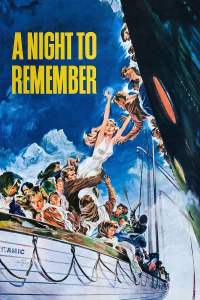 Up last is a titanic film that can give DiCaprio’s a run for its money. A Night to Remember was released in 1958, and while it wasn’t the first film about the failed ship, it was the most accurate at its time. Unlike the newer release, it doesn’t create a single over-arching story to follow, but instead charts the paths of a dozen or more crew and passengers before and during the disaster. In fact, some scenes seem to lifted straight from this film to James Cameron’s movie. Starting a day or two before boarding, we see various people prepare and then depart, then the crash with the iceberg, and then the sinking and aftermath. It also follows the Carpathia, which came to look for survivors, and the California, which ignores the SOS calls though it was just 10 miles away, a fact not shown in the newer film. Why and how it sank is pretty much the same as it was shown in Cameron’s film, with the exception that it does not show the ship breaking apart, a fact not fully accepted in 1958 when this movie was made. Otherwise, extremely accurate, well shot, and supremely engaging, in glorious black and white.

 Jons Movie Takes
One thought on “Quick takes on 5 classic films”