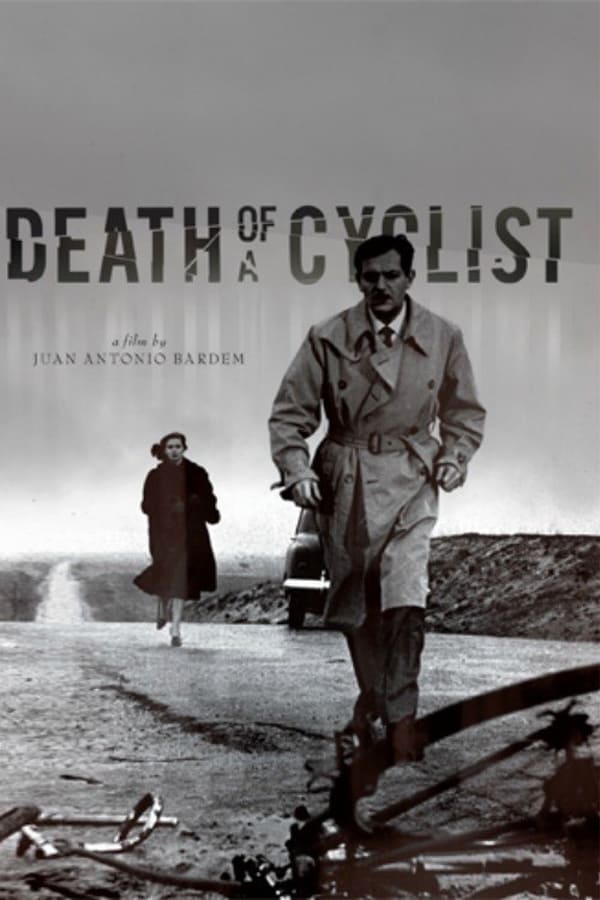
Released in 1955 and directed by Juan Antonio Bardem, Death of a Cyclist is an incredible psychological nail-biter. It starts with the death: a pair of lovers (Maria and Juan) are driving on a country raid when they hit a biker. The do not immediately go the police because they are having an affair and don’t want to be exposed. Maria is married to a wealthy and powerful man, Miguel, who keeps her in a lifestyle she enjoys. However, Maria and Juan are confronted at their next social gathering by Rafa, an entertainer who doesn’t have money (and seems to resent the privileged class he performs for) but who gets to hang out in the social circles because of his skill. Rafa hints that he knows something that will damage Maria and Juan. Fearing that Rafa knows of their tryst and the killing, the two spend the rest of the film fearing their exposure. Bardem used shadows and close-up shots to brilliant effect, ratcheting up the tension until a spellbinding conclusion.

The Executioner is a dark, black comedy from director Luis Garcia Berlanga, released in 1963. It is about a young undertaker, already an outcast in society because of his job, who is smitten by an executioner’s daughter, also an outcast because of her father’s job. What is meant to be a one night stand turns in to a marriage when the girl becomes pregnant, and in order to secure the family a place to live under Franco Spain (where he must have a government job to apply for a decent apartment), he takes up his new father-in-law’s business and becomes an executioner himself. However, the mere thought of death scares him (as an undertaker, he could disassociate with the body since he didn’t see the death occur) and he refuses to take a life, so he spends the next year living in fear that someone in the area will commit a bad-enough crime to warrant the death penalty. When it finally happens, he holds out hope for a pardon, which never comes, and he must perform his first execution. The penultimate scene where the guards are marching the quiet, acquiescent doomed man and the wailing, reluctant executioner is dark comedy at its finest. When the young executioner returns to his wife and father-in-law and states he will never do it again, the retired father-in-law, who has casually spoken of death throughout the film, can only affirm that he once thought so too. A very funny, but also at times touching, film, with subtle (and sometimes not-so-subtle) digs at the authoritarian government.
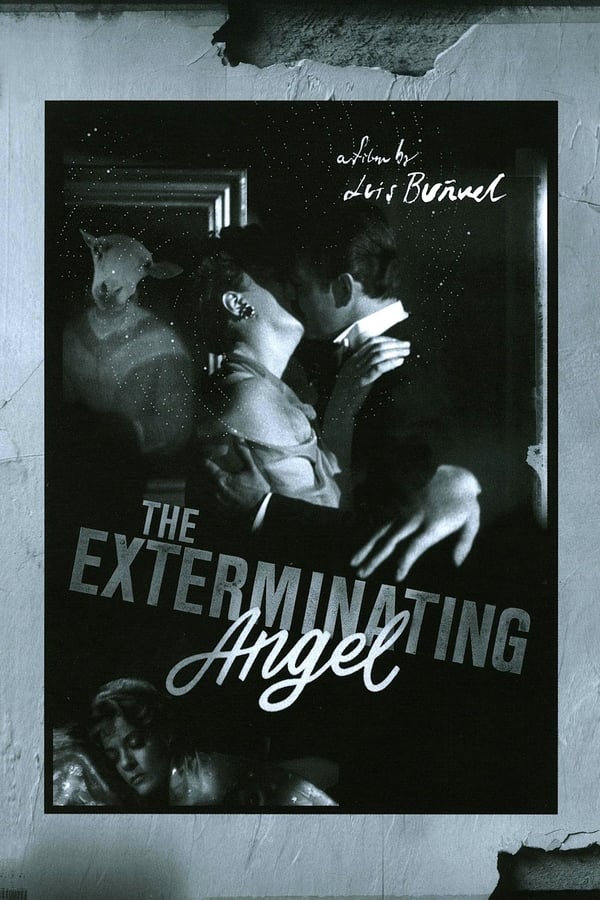
The Exterminating Angel, from 1962, is a fun surrealist film by acclaimed director Luis Buñuel. It takes the implausible scenario of what were to happen if a group of cultured men and women did not leave a dinner party when they were supposed to. What happens in this film, is they find once they’ve missed their chance to leave, they are stuck in the living room. Each of them finds they cannot find the will to cross the threshold, and what is more, the police and family outside the house find that they cannot gather the courage to pass the front gate. So we are left with a group of 12-15 guests inside, for days or weeks or months (we are never told. It seems like an eternity but so would any situation when you are cannot leave a single room.). This group of bourgeois socialites at first try to maintain decorum, but as hunger and ultimately insanity take hold, they devolve to survive. A fascinating look at humanity, with Buñuel’s typical poking fun at the bourgeois and cultural norms.
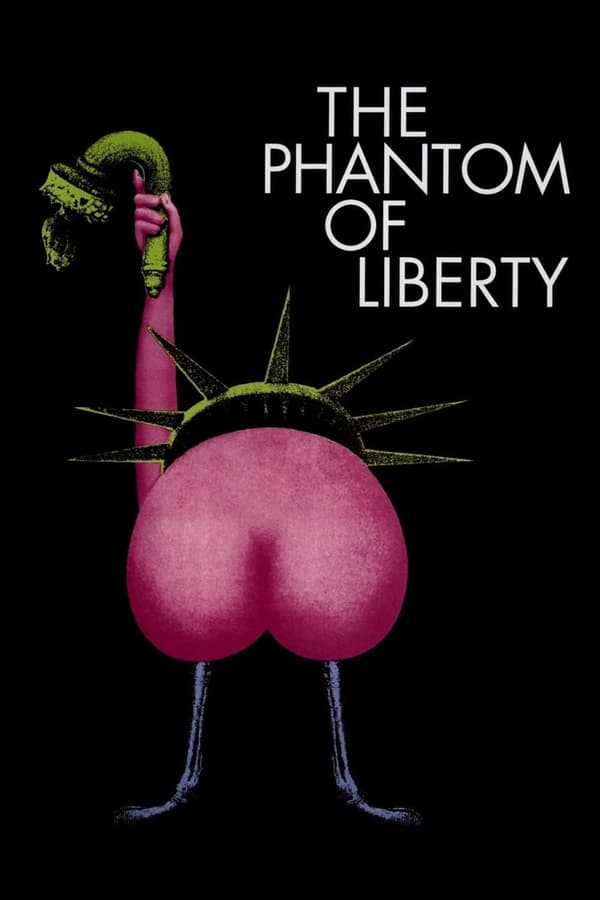
This was supposed to be all Spanish films, but I’ve been on a Buñuel kick lately, and he’s at least a Spanish director, so that’s ok? My final two today are two of his French movies. The Phantom of Liberty (1974) was, for me, unfortunately a dud. I’ve enjoyed most of his films, but like The Milky Way, this one did nothing for me. Also like The Milky Way, this film was bereft of a coherent story, and felt almost like bad sketch comedy. Imagine sitting through an entire episode of SNL and not laughing, and that’s where I was for The Phantom of Liberty. It is a stream of ridiculous scenarios, one after another. There is the family that gathers at the dinner table, but their chairs are toilets, and they each drop their drawers or hike up their dresses to sit, and then have a normal conversation, before retiring to a private bathroom-like room to eat alone. One skit involves a pedophilia-like man sharing pictures with some young girls in a park. When the parents find the pictures, they are repulsed, but when the viewer finally sees them, instead of nudie pics we see pictures of famous buildings and monuments. Other such skits pepper the film, the next more absurd than the last. I felt like Buñuel made this film for his own amusement, and he didn’t care much if viewers were in on the jokes. Extreme fans of surrealism, and especially film lovers who like to see the envelope pushed just for its sake alone, would love this film, but its not my cup of tea.
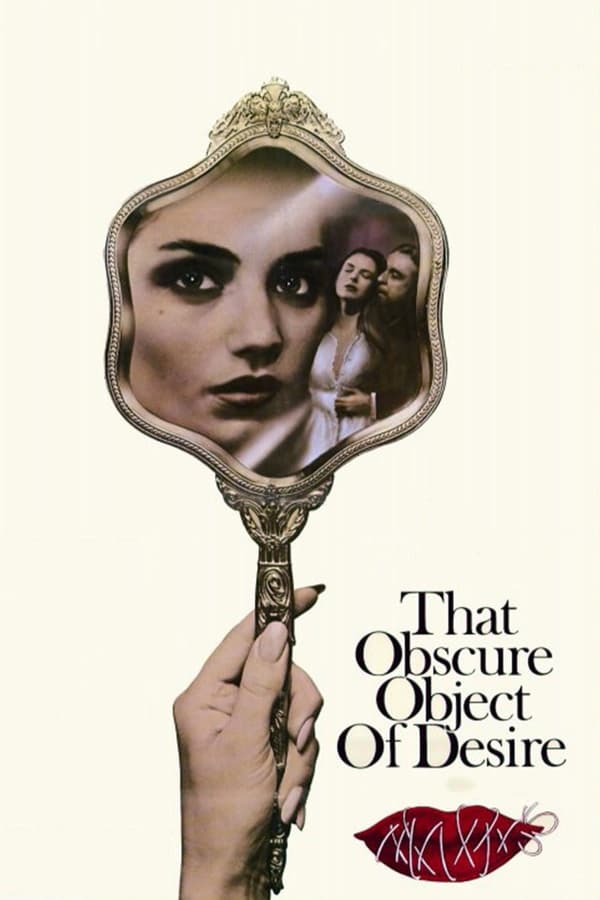
For my tastes, Buñuel got back on track with That Obscure Object of Desire in 1977, the last film he made before his death. This one has it all: an engaging story, terrific acting, and brilliant filmmaking. A rich older man, Mathieu, is smitten by a young Spanish woman, Conchita, and becomes obsessed with her. It quickly grows to him lavishing her with gifts and money, but she refuses to sleep with him, (correctly) knowing that she will be cast aside once he gets what he wants. She doesn’t do this in order to keep receiving gifts though, but only because she wants him to love her. All of this is told as a story, by Matheiu to his fellow train passengers, after they witnessed him dumping a bucket of water on Conchita’s head in the beginning. A great story, but the most fascinating aspect of this movie is Buñuel’s decision to use 2 actresses to play Conchita, one a very Spanish-looking, voluptuous, sultry woman, and the other a slimmer, more model-esque, cold French-looking woman. Did he do this to drive home the point that Mathieu only saw her as an object and it didn’t matter who the woman was, or because in doing so, it forces the viewer to see her as an object too? I couldn’t help but have different feelings towards Conchita depending on which actress was on screen. Is it my imagination, or did Buñuel give them different personalities, or did he use 2 woman to force the viewer to self-examine how we feel towards women based on appearance? We’ll never know, but fantastic work.

 Jons Movie Takes
2 thoughts on “Quick takes on 5 Spanish films”