If you’ve read my blog for awhile, you know I write about classic books, classic movies, and newer films. Rarely do I write about the movies “in between” the 70’s and today. I still watch them, but I figure no one wants to read about movies they’ve probably all ready seen. I’m making an exception today for one of film’s best modern directors, Terrence Malick. I’ve always heard about him but only seen one film until now, so I thought there might be other people in the same boat as me.
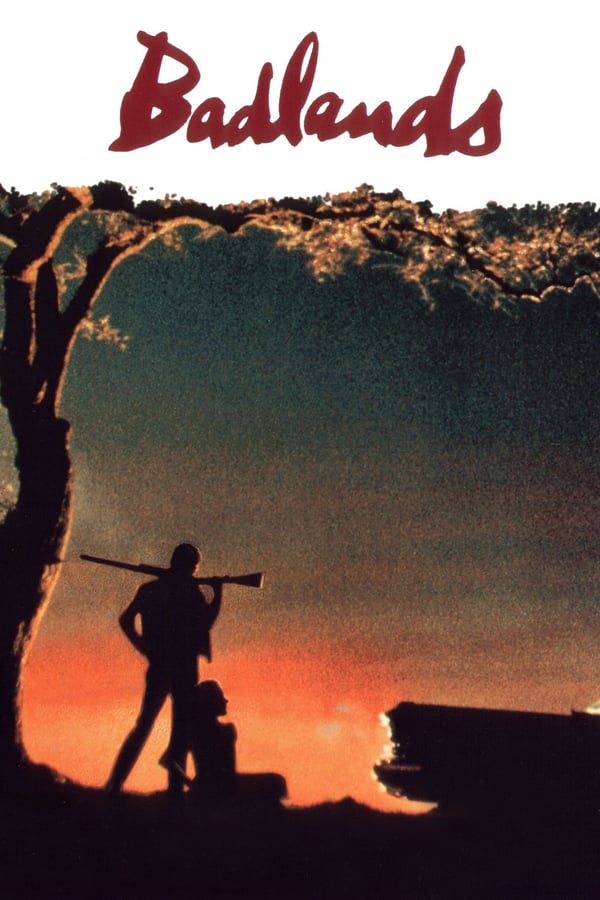
Badlands was his first film, from 1973. It stars Martin Sheen and Sissy Spacek (before they were household names) as a pair of young lovers who go on a murder spree, or rather, the mid-20’s man does and his teenage girlfriend tags along. Kit is a bit of a drifter and ne’er-do-well, but the young and pretty Holly is drawn to his rebel, “James Dean” look. When Kit decides they are leaving town together and Holly’s father objects, Kit kills him. The love birds then go off to hide in the woods, but it obviously isn’t long before they are discovered. Kit continues to kill people who find them, even a friend of his. Finally Holly decides she’s had enough, and just as the police close in, she abandons Kit and turns herself in. Kit gives them one more chase, but eventually also gives up, though to keep his pride, he makes it look like he had no choice. The smooth and care-free Kit is popular even among the cops at the jail, and they all wish him luck as he heads to federal jail to face the death penalty. With his dashing good looks and devil-may-care attitude, Malick makes the viewer like Kit too; even when he is killing we secretly hope he never gets caught.
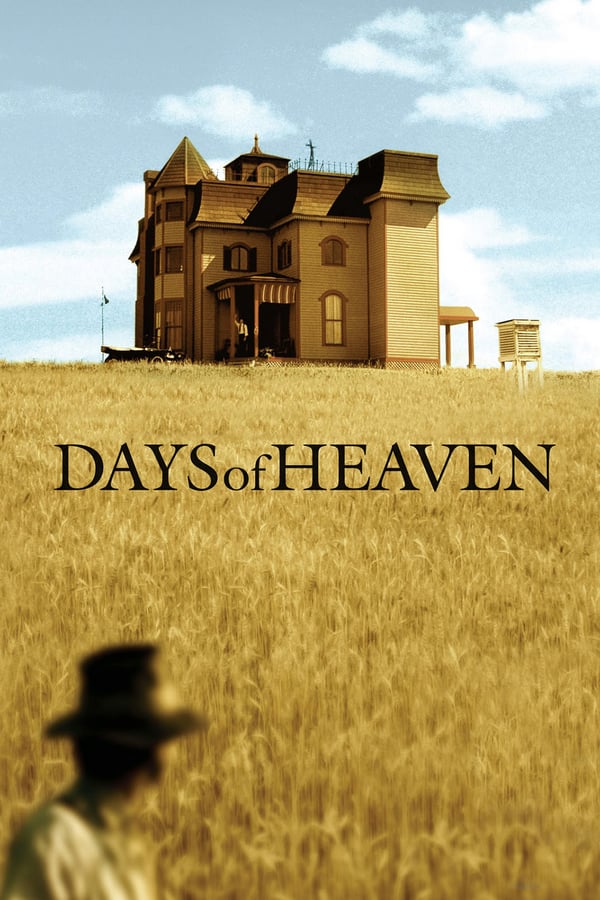
For much of the film, I didn’t know what to make of 1978’s Days of Heaven. It is heralded for its cinematography, and the vast, sweeping landscapes of rural Texas are indeed gorgeous, but the plot wasn’t doing much for me. Until the last half hour that is. It stars a young-looking Richard Gere as Bill, a man fleeing Chicago after he accidentally killed his boss at a factory. He takes his young sister (Linda) and his girlfriend (Abby), but insists they call her a sister as well to avoid attention. The trio end up working as harvesters on a wheat farm, run by a single rich man with no family (an even younger-looking Sam Shepard). When Bill overhears a doctor telling the farmer that he only has a year to live, he encourages Abby to marry the farmer and thus inherit all his money after his passing. Abby reluctantly goes along with it, but afterwards grows accustomed to the new lifestyle, and even falls in love with the farmer. The shit hits the fan when the farmer begins to suspect that Bill is more than just a brother. The film is indeed beautiful to watch, but I found the editing to be a bit choppy, almost like they had 30 hours of film and were trying to cut it down to 90 minutes of movie (maybe not far off the mark knowing Malick’s reputation). The ending does make it up to the viewer though, with all of the characters (with a single exception) getting their just rewards, and there plenty of deeper meanings to weed out if you have the patience for reflection.
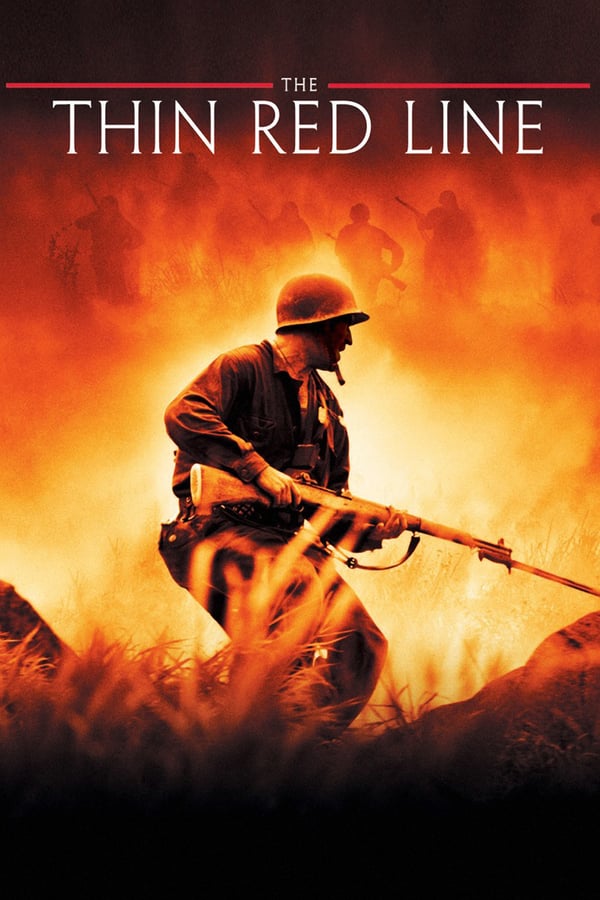
Malick waited 20 years to make his third film, The Thin Red Line in 1998. This one I’ve seen before, and while I try not to write about films I’ve previously seen, I’ve made an exception for what I consider to be one of the best war films ever made. Based on a book, this movie tells the tale of an American attack on an island during the Guadalcanal Campaign in the Pacific in World War II. It shows humanity at its best, and at its worst. There is an aging colonel intent on making a name for himself no matter the cost of human lives, a captain unwilling to see his men die, even if it means disobeying an order, and an enlightened soldier who sees beauty in all things, even in the ugly. There are moments of heroism and cowardice. When the Americans first assault the ridge and are taking heavy losses, we see some men rise to the occasion and others cower in fear, and Malick does an excellent job of humanizing the Japanese forces, showing them go through the same gamut of emotions when the tide of the battle turns. This film has a large military-full cast, and it seems every face is a recognizable movie star, and all do a marvelous job. This is an action film first and foremost, but the pacing on the slower, more philosophical moments may bore some viewers. If you want a war movie with heart, with emotion, and with deeper meaning than just “kill the enemy,” it doesn’t get any better than this.
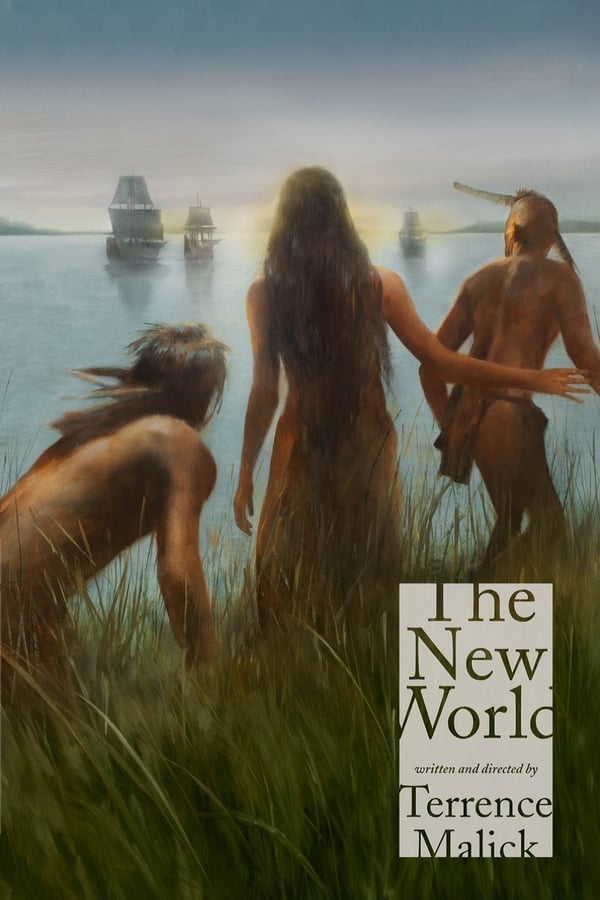
After a 20 year break, 7 years seems like just a pause, but that’s how long it was until Malick returned with The New World in 2005. A new take on the classic John Smith/Pocahontas tale, it stars Colin Farrell and Q’orianka Kilcher as the star-crossed lovers, and also Christian Bale as Pocahontas’s later husband, John Rolfe. I watched this one shortly after The Thin Red Line, and except for the color of the trees, I thought Malick may have used the same shots of sunlight sneaking through leaves in both films. That minor criticism aside, this is a very lovely film, though not very historically accurate. John Smith comes to the new lands and is part of the group that founds Jamestown. Struggling to survive, they do some trading with the local native tribes, where Smith meets Pocahontas. When the two peoples start fighting each other though, Pocahontas is caught in the middle, ultimately being cast off by her people for it. She lives with the English in their new town, but is left by Smith when he goes back to England. Rolfe then falls in love with her, and in the end, brings her back to London. Lots of lovely shots as you’d expect in a Malick film, but a good film too. The narrative voice-overs aren’t quite as enigmatic as his earlier film, which creates a stronger, more linear story.
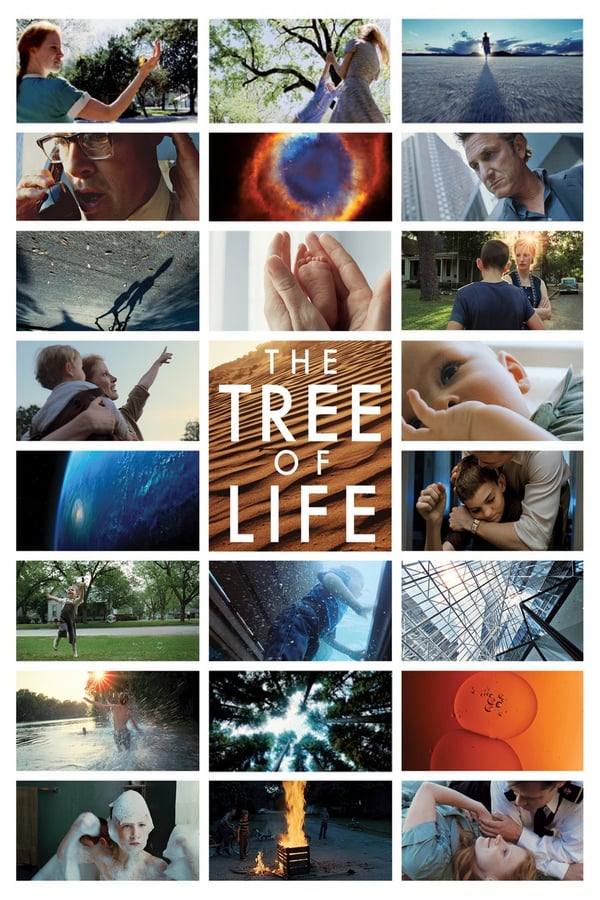
In 2011 Malick made what some call his most philosophical film, The Tree of Life, but it might as well be called the story of life. It has a basic story about a trio of brothers in the 1950’s, in a house with a loving mother but an enigmatic father. Like most fathers of that period, he was what was called “strict” back then, but these days would be considered emotionally abusive and borderline violent, berating the boys for things like leaving elbows on the table, addressing him as “sir,” and forcing them to say “I love you” and giving him a kiss good night. It would be easy to hate him, but Malick does a great job of painting him as a human being; we can loathe his actions while still commend him for working a job he hates just so he can support his family. Much of the film is told in flashback to the kid’s childhood and his two brothers (one of which we know died later on at 19). As the main boy gets older, he grows rebellious and becomes a bit of a problem child. This story is really just the frame of the film though, which deals more with life in general, from the big bang to evolution to hints of a greater power orchestrating it all. We see births and deaths, but beauty in it all. The family’s lives are told in pieces, like the memories of our own lives: some are fleeting images which seem unimportant at the time but which stick with us (playing games as children, laughing with mother), others are more detailed and longer moments. A very profound and beautiful film, and honestly, I didn’t think it moved as slow as some of its critics decried (and I watched the 3+ hour extended edition too!). Superb acting by Jessica Chastain and Brad Pitt as the parents. Malick would never tell you what his movie means, leaving that for the viewer’s interpretation. I came away from this one thinking that for those that seek the meaning of life, one need look no further than their own family.

 Jons Movie Takes
3 thoughts on “Quick takes on 5 Malick films”