
Long before the underground hit Crash in 1996 (not the Paul Haggis movie of the same name obviously) and even before the Jeff Goldblum-starring The Fly in 1986, director David Cronenberg was making strange, and sometimes disturbing films. I of course have seen The Fly several times, and saw The Brood sometime in the last year or so, and decided to give some of his other earlier works a shot. His first two films are shorts (about an hour each), and while a bit amateurish, they still show glimpses of his style and you can see what is to come. Stereo, from 1969, follows a group of young people being experimented on for telepathic abilities. The experiments get increasingly dark as the movie goes along. It is narrated in an emotionless, dry, detached voice; viewers today will see an almost Siri- or Alexa-like comparison. I don’t mind slow films (in fact I like them when done well), but this film tried my patience with its long, quiet scenes with no sound, and felt long even at just an hour in length. Told in a documentary-like fashion, it is honestly a bit of a slog.
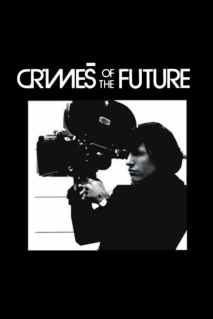
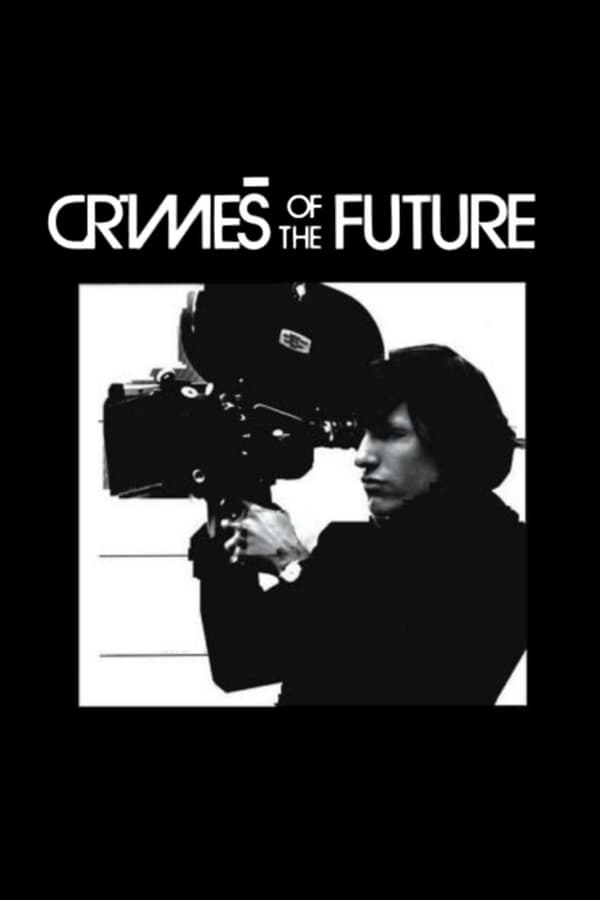
The much better Crimes of the Future followed in 1970. Like Stereo, it was shot in silence with a voice-over and sound added later. In a dystopian future, all women of child-bearing years have died, due to a mysterious fatal illness caused by cosmetics. The disease has just started to spread to men too. When someone comes down with it, they begin to bleed from the nose, ears, and mouth, and this secretion acts as an aphrodisiac: people seeing a dying person are unable to resist licking the blood. Our main character is a scientist at a dermatology institute, who sees his last patient die to this illness, and he then wanders from group to group looking for somewhere to fit in. These groups are strange and often erotic in nature (foot fetishes, etc). Eventually he stumbles upon a pedophilia group, “illegal but inevitable” the narrator says, since older women are all but extinct. Throughout the film the narrator has decreasingly used first person narratives and by the end, is referring to himself in the third person, as he loses his grip on his humanity. Needless to say, there isn’t a happy ending here. A very strange, and deliberate (i.e. slow paced) film, but with a good sense of dread from the very first words, this is a haunting depiction of humanity on the cusp of annihilation. I enjoyed it more than Stereo, and here, the sparse dialogue added to the overall creepiness which the director was aiming for.
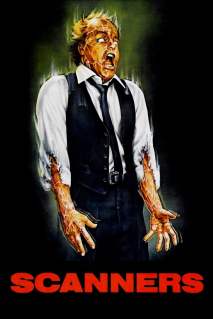
Scanners was Cronenberg’s first hit, in 1981, and it spawned a rash of sequels (of which Cronenberg was not attached). Often parodied, this movie is “the one with the exploding head.” Cameron Vale is brought in by a secret agency called ConSec, where he is told that he is a scanner, someone with psychic abilities who can control other people’s actions. Though he was never taught how to use these skills, he can learn to control them and become very powerful. ConSec wants to use Vale to go after Revok, a strong but evil scanner who is recruiting others to his cause, though we do not yet know what that cause is. Vale finds help of his own and is finally able to get close to Revok, but not before realizing there are moles inside ConSec attempting to help Revok along. The final showdown between Vale and Revok, when they turn their abilities upon each other, is pure 70s/80s gorefest. The film is a bit dated and lacks strong acting (though Revok is portrayed by long-time B movie hero Michael Ironside), but it is fantastic in the sci-fi/horror vein, with thought-provoking elements like Cronenberg’s The Fly, offering moments of deeper contemplation. Fun film.
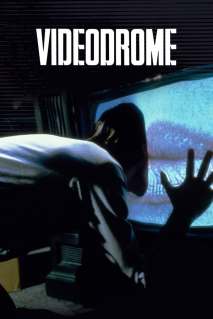
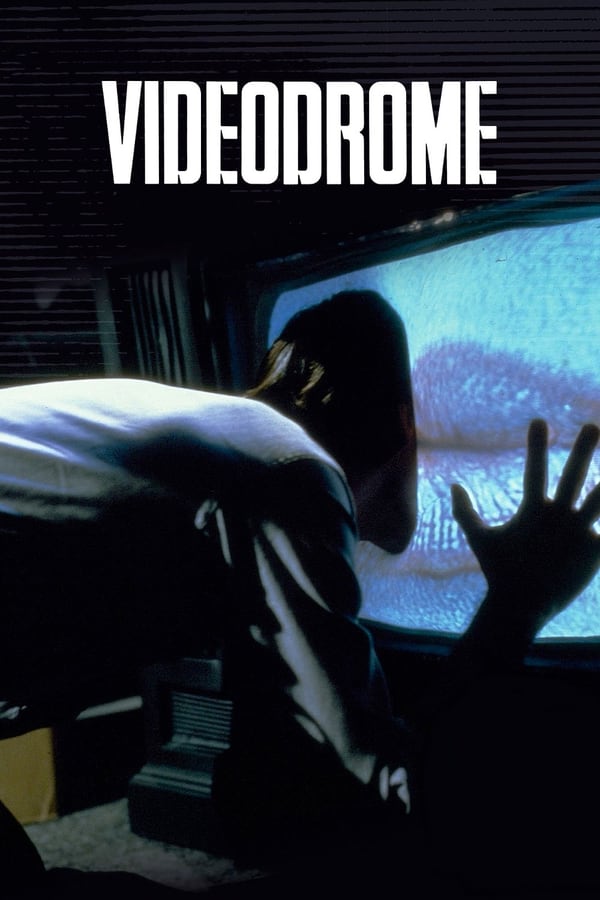
From 1983, Videodrome is a psychological horror film starring James Woods as Max Renn. Renn runs a sleazy cable channel that showcases softcore porn and slasher films, and he is looking for something stronger to help his ratings. He runs into a program purportedly from Malaysia called Videodrome, which shows rapes, tortures, and murders, and seeks to get it on his channel. Renn gets more than he bargained for, because it turns out that the TV signal causes hallucinations to the viewer, and Renn starts seeing all kinds of crazy stuff. He ends up in the middle of a battle for the control of people’s minds, fought between the Spectacular Optical Corporation and a cult praising the “new flesh,” both of whom seem to want to send signals through the TV to control viewers. Renn sees people go into and come out of the television, as well as sees fissures open in his abdomen, and a gun fuse to hand in a grisly fashion, and he goes on to carry out murders in the name of his controllers. In a prophetic look from 1983, Cronenberg sees a time when the viewer has their own humanity and will do whatever the person on the TV tells them to. Disturbing viewing for sure, but like Scanners, it is still a gore film with message.
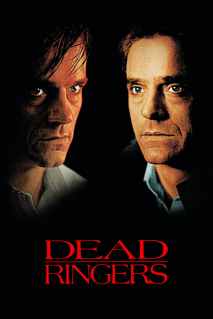
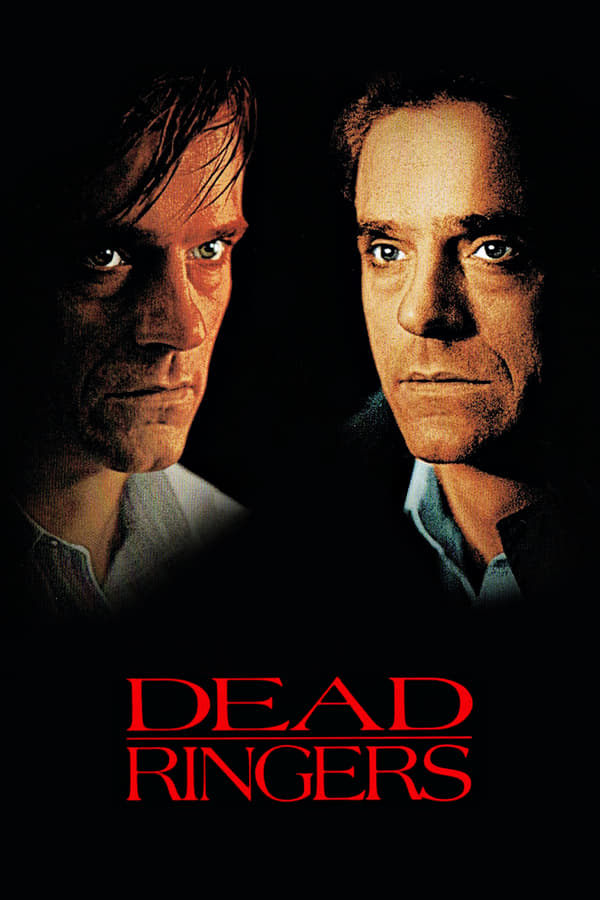
Dead Ringers (1988) drops the gruesomeness (except for a single scene near the end) but keeps the psychological thrills. The film is a tour-de-force for Jeremy Irons, who plays both Elliot and Beverly, twin adult men, both brilliant gynechologists. Elliot is suave and confident, Beverly (his effeminate name is not a mistake) is quiet and bookish. Beverly falls for a famous actress named Claire, but only after Elliot has “warmed her up.” When Claire realizes she was seduced by one but ends up with the other, she storms off, and Beverly is unable to cope with her loss. He resorts to drug use, which impacts the twins’ professional lives. When Claire comes back and Beverly is able to sober up, they find that Elliot has now sunk into drugs and alcohol himself. Beverly realizes that they cannot both lead a whole life at the same time, so he kills Elliot, telling himself that he is simply “finally separating the conjoined twins.” In the end though, he is unable to share joy with Claire, and returns to his brother’s dead body, to lie next to him. A fascinating film, and Irons is brilliant in the dual role; the movie can be interpreted as a look at split personalities and the difficulties in leading a normal life with the disorder.
Finally, just a quick note about Cronenberg’s Naked Lunch, released in 1991. It is of course based on the famous (or infamous) book by William Burroughs, which I read a couple years ago. I hated the book, but absolutely loved the movie. Unlike the book, the film has an actual plot, and it does a great job of showing Billy Lee’s fall into addiction. As his hallucinations pile up, even the viewer doesn’t know what is real and what is imagined. Highly recommended if you want to go for a wild ride. Semi-biographical about Burroughs, as he admitted his books were too. Probably my favorite Cronenberg flick.



 Jons Movie Takes
3 thoughts on “Quick takes on 5 Cronenberg films”