
Here are a set of films made by the famous Spanish filmmaker Luis Buñuel, who worked in Spain, Mexico and France. This first film was made in the latter in 1964, Diary of a Chambermaid. One of his most accessible films, it lacks much of surrealist elements that Buñel is often associated with. Celestine is a beautiful young woman who takes a job as a maid on a rich estate outside the city. She finds the politics in the estate very strange. The owner is an old man with a foot fetish, but the house is run by his overbearing daughter and her womanizing husband, who seems to always get the help pregnant before moving on. When a young girl is raped and murdered in the woods, Celestine suspects the roguish gameskeeper, and even goes so far as to plant evidence to set him up, but the viewer is left wondering if he was the guilty party after all. A nice little film, though perhaps not as deep or lasting as some of Buñuel’s other works.
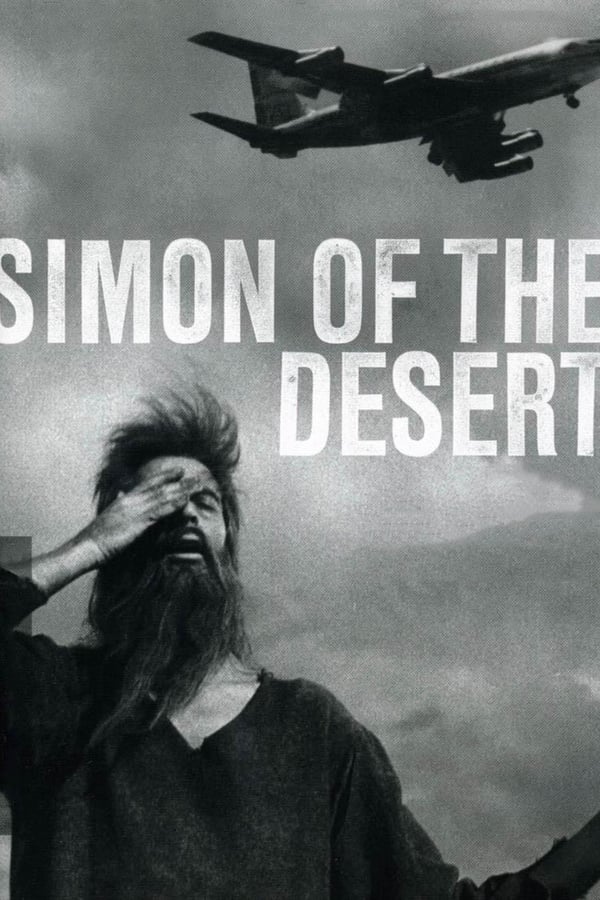
Simon of the Desert (1965) has the distinction of being the last movie Buñuel made in Mexico. A short movie at just 45 minutes, it is loosely based on the Syrian saint Simeon Stylites. Simon is an ascetic who lives upon a tall pillar in the middle of nowhere, praying continuously to get closer to God and performing miracles for those that come to see him. He is visited three times by Satan, in the guise of a beautiful young woman, who tempts Simon to leave the pillar and come down for some of Earth’s physical pleasures like food and sex. He rebuffs her as much as he can, but ultimately she shows him a vision of the future (a ’60s dance club where young people are casually dancing without a care in the world), and Simon is forced to realize that his goal of bringing people closer to God will ultimately have no value. A not very subtle showing of the atheist Buñuel’s caustic view of religion.

Buñuel’s most famous work came in 1967, Belle de jour. Severine (famed French actress Catherine Deneuve) is a beautiful young woman who is bored by her hard working, dutiful husband, to the point that she can’t get sexually excited by him. She day dreams about her husband being more forceful with her, and this leads her to finding an upscale brothel to get her kicks. She becomes a “lady of the afternoon” since she needs to be home before her husband. As a prostitute, she indulges in all of the fetishes that even the other girls don’t want to partake in. Eventually one john gets attached to her, finds out where she lives, and comes to her house, threatening to expose her to her husband. He ends up doing more than that, and tries to kill Severine’s husband. He isn’t successful, but this does leave the husband in a wheelchair. At the end, Severine is waiting hand and foot on her husband, but the film ends on a decidedly vague note, leaving the viewer to wonder if the whole film was a dream, or what exactly really happened. A fantastic film, it is a great example of the 60s awakening of a woman who knows what she wants and goes to get it.
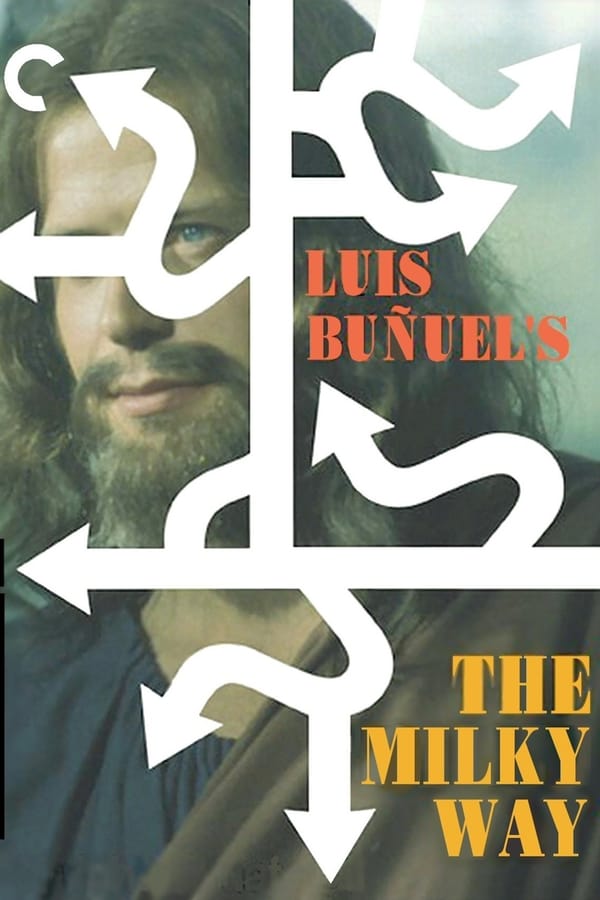
Next up was a film I did not enjoy, 1969’s The Milky Way. Filmmakers cannot help but put their views in their works, as an artist will always base their work on their outlook on life. I understand Buñuel was raised in a devout Catholic house and rebelled against that as an adult, becoming an atheist, but this film is basically just a big attack on Catholicism and standardized religion in general. A couple men are headed toward Santiago de Compostela, a famous religious site, but they are going there to hustle people, not for any religious reason. Along the way, they find themselves around others who are having philosophical or religious debates. Routinely, people are poking holes in scripture or Catholic church credo. At the same time, some of Jesus’s actions are shown in flashbacks, but these are sacrilegious more often than not, like some of his regular every-day words are misinterpreted by his followers to have greater meaning. In a typical Buñuel surrealist moment, the present and past are brought together when some people previously interacted by our duo run across Jesus and his disciples, just in time to witness a miracle of Jesus restoring site to the blind. But in another poke of fun, the camera zooms down to their feet at the end, where we see that, though no longer blind, the men still pull out their walking sticks, implying that they are still “blindly” following Jesus. Even if I were not a believer, I’m still not sure I would enjoy this film. Some of the statements made to attack the church are so blatantly ridiculous or taken out of context, that it ruined the whole experience for me.
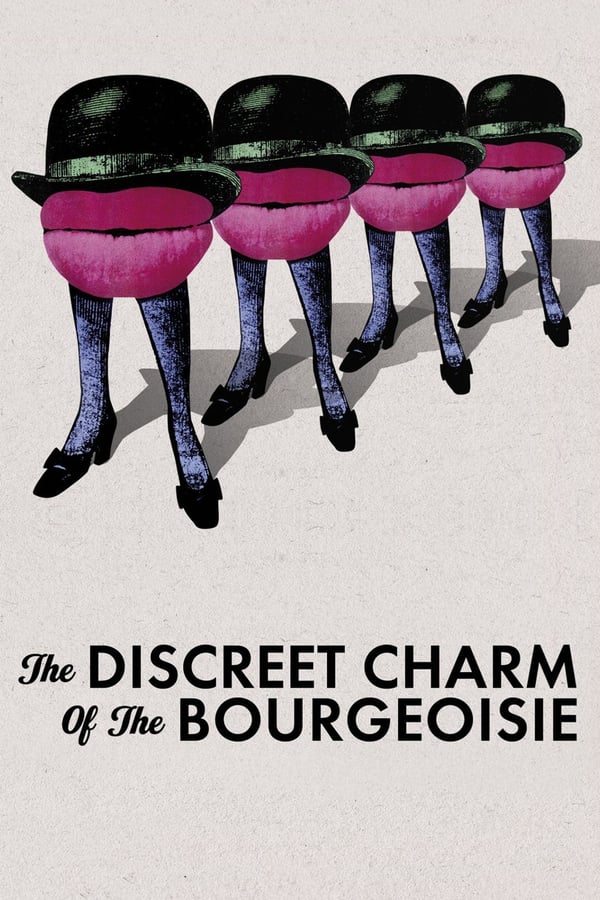
Buñuel redeemed himself in my eyes with The Discreet Charm of the Bourgeois (1972), a delightful dark comedy art film by the surrealist expert, which won the Oscar for best foreign film. It follows a trio of couples in their attempt to have dinner together, people that show only a bare modicum of discretion and share charm only with each other. Their dinners are always interrupted, by confused dates, or a restaurant where the workers are mourning the death of the owner (who is laid out in back), or a cafe which is out of tea, coffee, and milk. In the latter half, when they are finally able to eat together, violence always breaks out, only to end with one or the other of them waking up realizing it was all a dream. These dreams blend with reality, as does past, present, and possibly future, into a cacophony of events leaving the viewer (joyously) wondering what is real. To give away more would spoil it for you, if you ever get a chance to watch (and I suggest you do). I didn’t even bother trying to look up what Buñuel meant with this film. If I’ve learned anything from reading interviews he gave, it is that he disdained giving interpretations of his work, and wanted people to form their own thoughts. My thoughts is this is a great film with a high re-watchable factor.

 Jons Movie Takes
One thought on “Quick takes on 5 Buñuel films”