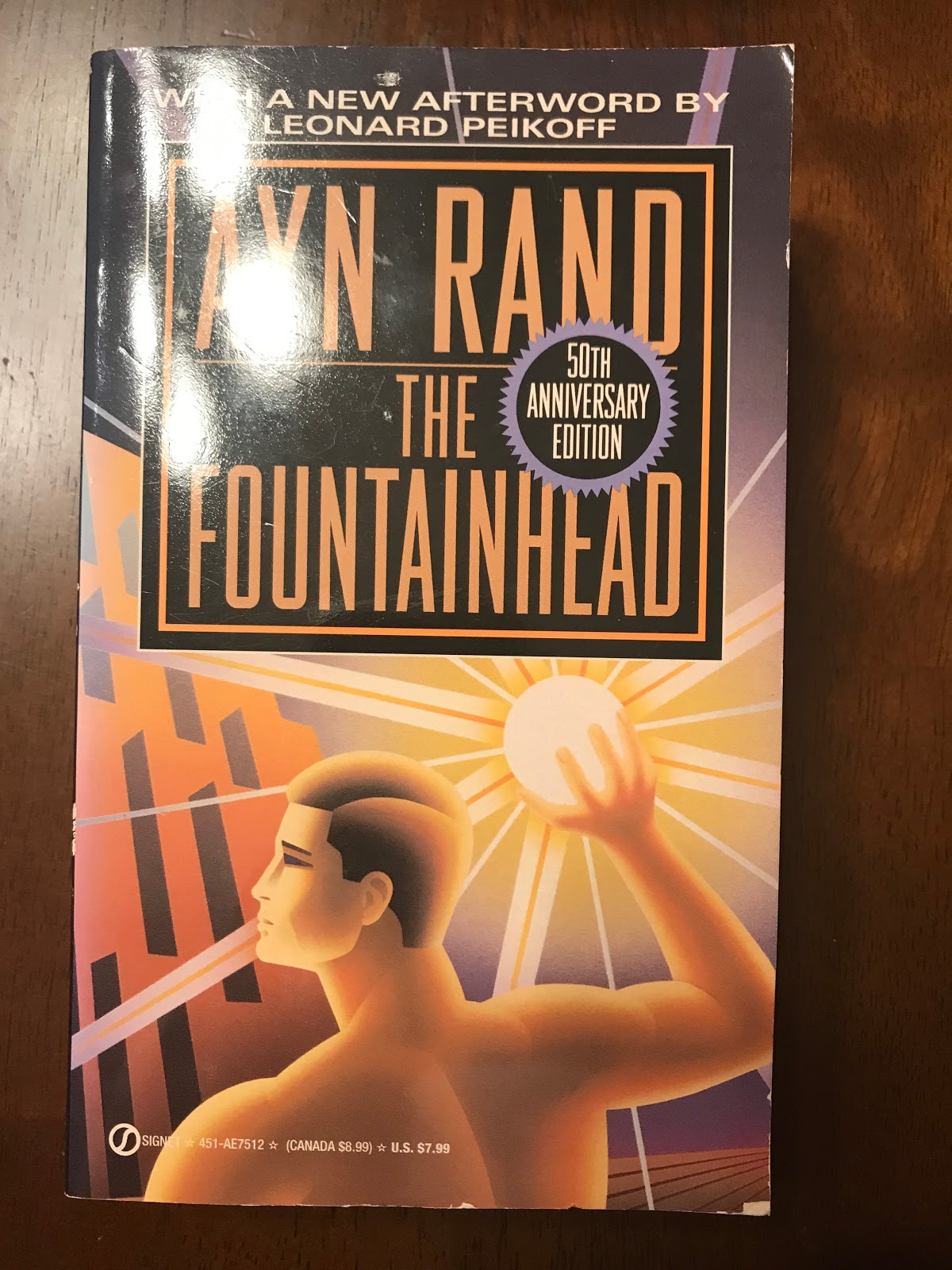
I enjoyed Atlas Shrugged when I read it a couple years ago, so looked forward to The Fountainhead, Ayn Rand’s other successful novel. This one, released nearly 15 years earlier in 1943, is, I think, more well written, but with a less compelling story. Still a thick book, it is not for the faint hearted. Like her other book, it showcases Rand’s views on objectivism, and her pro capitalist/anti socialist stance. Fair warning, I can’t discuss the whole of this book without lots of spoilers, which develop slowly throughout the novel (part of what makes it so great!).
The main character is Howard Roark, who is introduced at the beginning. He is cocky, self assured, and ambitious. In the beginning, he is expelled from architect’s school for not willing to bend his ideals. He envisions constructing modern buildings with none of the frills or “doilies” that the current architects are using. When asked to use these designs, he refuses, and so in the beginning he has a hard time finding work. The buildings he does make are loved by those he builds for, but they never gain mainstream appeal for one reason or another.
Roark had attended school with Peter Keating, who seems to be the exact opposite of Roark. Whereas Roark designs each building according to the owner’s needs and also taking in its environment so it can blend well, Keating only builds frilly, “pretty” buildings following the current trends. At the same time, Keating is head over heels infatuated with Dominique Francon, a beautiful but emotionally cold intellectual who floats in their circles. Francon however only has eyes for Roark, for which we do not understand the “why” at first. We think that Keating may be the villain of the novel, but only as it develops, do we realize it is actually another individual named Ellsworth Toohey, a fringe character for much of the first third of the novel.
Toohey writes articles and books about architecture, but his real goal (which we do not learn until much later) is the deconstruction of the individual. Toohey doesn’t want headstrong, free thinking individuals in our society. Toohey wants people who only think collectively, who only do what society wants them to do. Toohey envisions a society where we do not champion champions, where instead we bring those champions down to the level of the lowest member of society. No one stands out, and all are equal.
The book really comes together as we see Roark struggle against this new, developing society, aided (in a very cool, understated way by Francon). In the end, he is just one man against a changing world, but he is never broken. A fantastic read, full of emotion, and Rand does a great job of pulling you in and getting you emotionally involved in Roark’s success.

 Jons Movie Takes
One thought on “Rand’s ambitious character and views in The Fountainhead”