Yes, there are only 4 films written here despite the title, but you can see my writeup of the fifth, Walkabout, here. When I watched that movie last October, and especially as time went on, I found myself thinking more and more about it, and wanted to check out more of director Nicolas Roeg’s work. Immediately, I found the way of storytelling, the sometimes quirky camerawork, and the visual sharpness of Walkabout is prevalent throughout Roeg’s work. So here are four more films, in order of release.
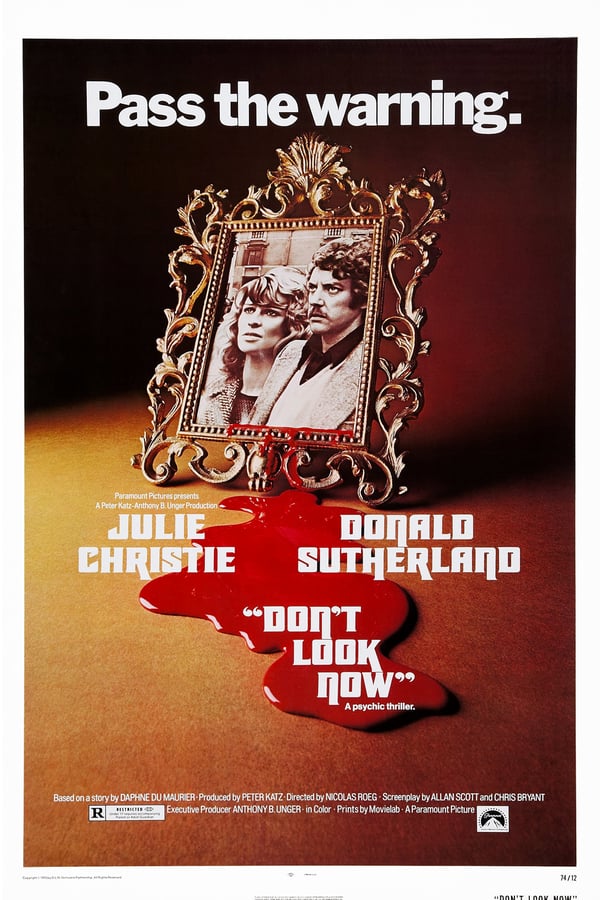
1973’s Don’t Look Now is probably Roeg’s most critically praised film. Part crime thriller, part supernatural, psychological thriller, it is a fantastic film. It stars Julie Christie and Donald Sutherland as a young married couple who have just lost their young daughter to an accidental drowning. Working in Venice, John Baxter is haunted by visions of his dead daughter. His wife Laura becomes obsessed with a psychic, who tells her the daughter is trying to warn John about imminent danger from beyond the grave, and that he must leave the city. John begins to become unhinged, at least from our perspective. He chases after the psychic, thinking she is a serial killer who has been plaguing the city, and begins to mistrust his wife. Leading up the finale, the viewer doesn’t know who to believe, and the final thrilling minutes are truly frightening.
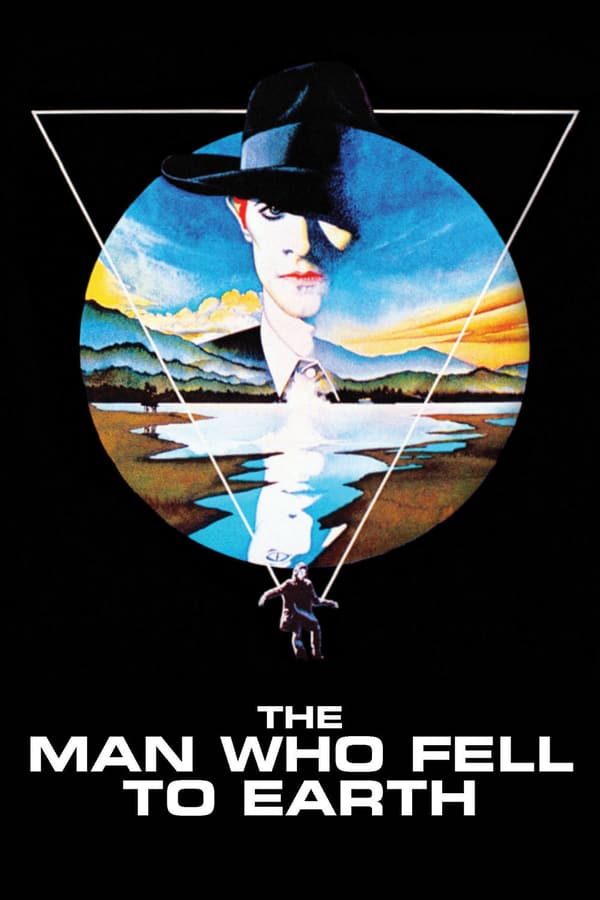
The Man Who Fell to Earth, from 1976, is a bizarre, yet intriguing movie. The opening scenes show Jerome Newton, played perfectly by David Bowie in his first lead acting role, crashing to Earth. Posing as a human and carrying his otherworldly knowledge, he puts out a few inventions over the course of a few years (which zip by quickly in the movie) and becomes extremely wealthy. We do not know his end goal for much of the film, and even when we do find that he is here to get water back to his dying family, as his home planet has become a desert, we also discover that this is not the main plot of the film. Newton is a very good man, staying away from drink, doing kind things for others, and is bent on amassing his wealth to reach his goal. As he spends time on Earth though, he falls in love, begins drinking and squandering money, and eventually is caught by the USA government, who spends decades studying him, as he shows no signs of aging. When they lose interest in him, Jerome wanders out, but now shows little desire to return home. An alcoholic, he has become a human with all of our faults. In a telling line though, he tells a friend that should a human visit his planet, he would probably have been treated much the same. Lots to enjoy in this obtuse, mind-bending science fiction, and a movie that has a lot of re-watchable attributes.
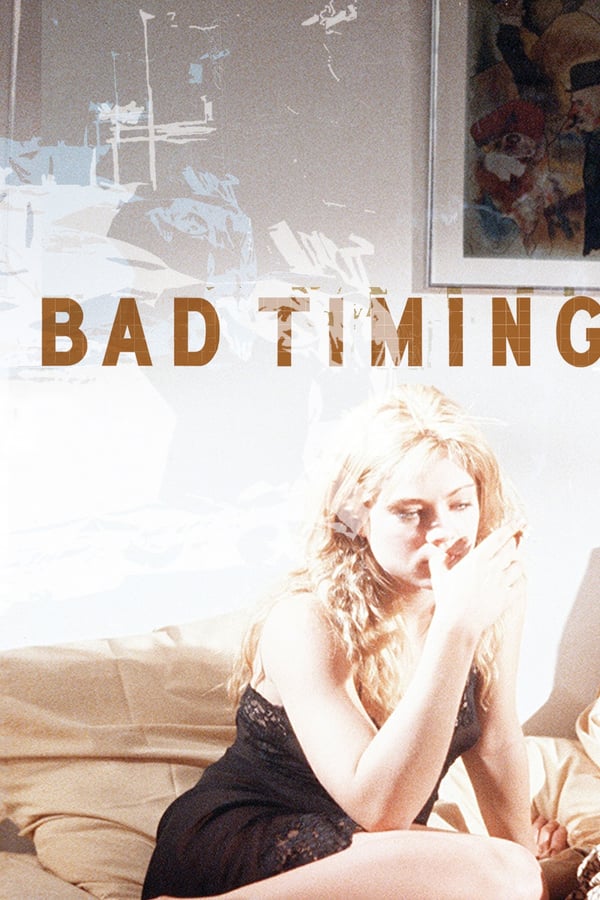
From 1980, Bad Timing is a movie about mental health and sexual obsession. The movie begins with a young, pretty woman, Milena (Theresa Russell), being rushed to the emergency room. Doctors try to save her life after an apparent suicide attempt. While she is being worked on, the police interview the man who called it in, Alex Lindon (Art Garfunkel). Alex says they were just friends, but as their history plays out in flashbacks, we quickly find they were more. The much older Alex was sexually obsessed and extremely possessive of the young, carefree Milena. Milena definitely had mental issues, some separation anxiety as well as a longing for a father figure (her gravitation towards older men happens throughout), and she lets Alex have his way with her physically and emotionally. In the end, the tale of these two is more disturbing than you can imagine. Stark and jarring, this film can make you squeamish at times, but it is wonderfully directed, and Russell is fantastic in the lead. With disconcerting scenes, this film did not get a USA release for many years, but I think it was just ahead of its time.

Last on the list is Insignificance from 1985. Unfortunately this one was my least favorite. I still like the filming, with Roeg’s trademark style still fun to watch, but there isn’t a real, cohesive story here to get behind. It is a fictional tale of four famous people coming together in a hotel room in 1954. Using nicknames instead of real names, Roeg brings together The Ballplayer (Joe DiMaggio, played by Gary Busey), The Senator (Joe McCarthy, by Tony Curtis), The Professor (Albert Einstein, by Michael Emil), and The Actress (Theresa Russell returning from the above film, in the eye-commanding role of Marilyn Monroe). The movie doesn’t really have a plot, it is more of a narrative about issues which faced 1950s America, and were still in the spotlight, in different ways, in the 1980s. Roeg celebrated the genius of The Professor and charisma of The Actress, showing her as a woman smarter than people gave her credit for, and a person willing to use anything at her disposal, including her body, to get ahead in life. At the same time, Roeg belittled The Senator and the Ballplayer as small people who only lived to further their own little existence. The best part of the movie is the 30 or so minutes where The Professor and the Actress are alone in the room, talking about knowledge and man’s search for it. Like Roeg’s other works, not a very accessible film, and while there is much to like, the end result feels like a movie that tries to be more than it is.

 Jons Movie Takes