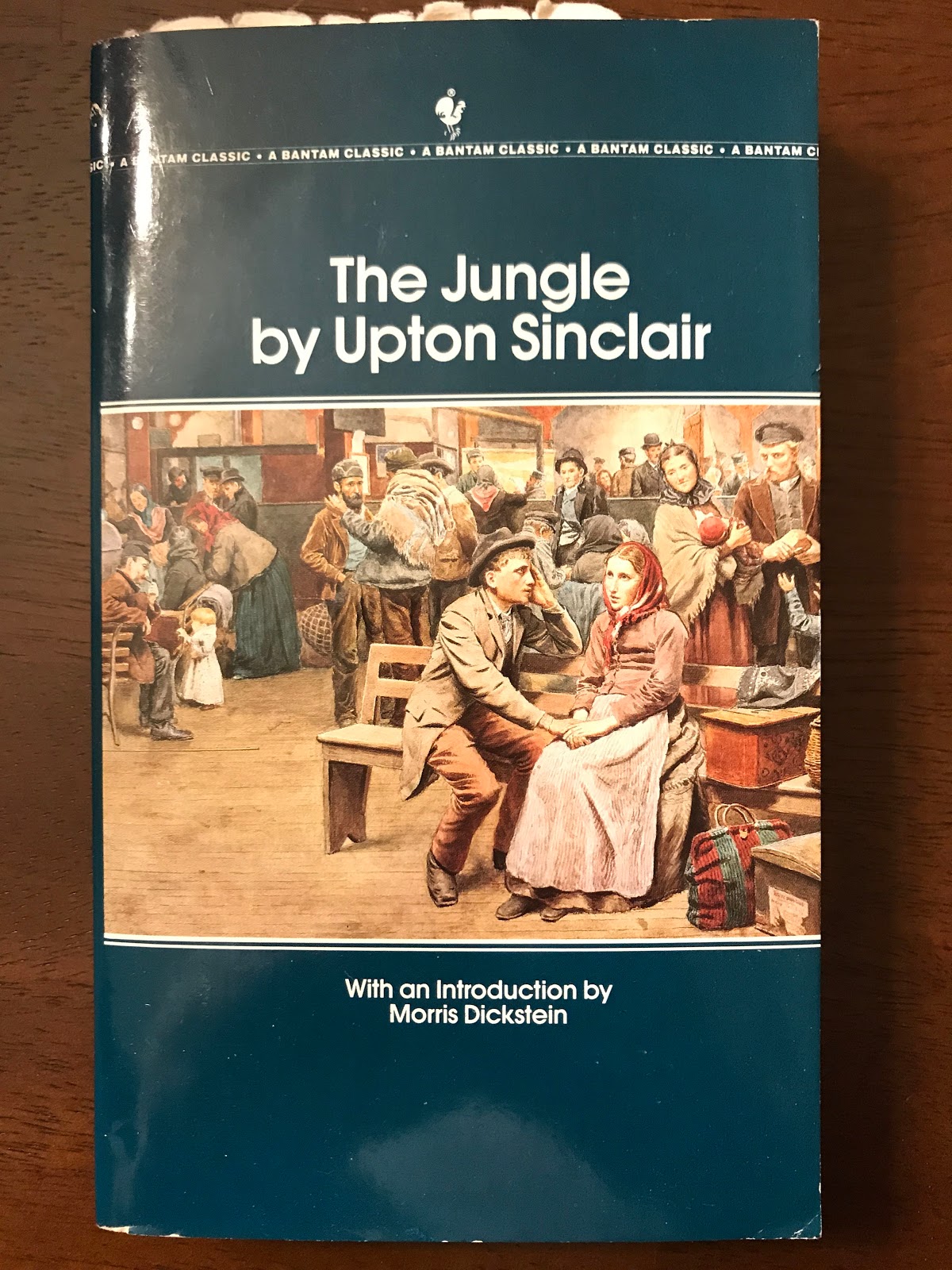
Upton Sinclair’s The Jungle is, for most of the journey, a downright depressing novel. All kinds of bad things happen to the main characters, and don’t expect things to turn around for them by the end.
In the book, an extended family moves from Lithuania to America in the early 1900’s, chasing the promise of an easier life. Jurgis is a strong, strapping young man with a new young bride, Ona. Moving with them is Ona’s cousin Marija, her step-mother Elzbieta, Jurgis’ father Dede, and some of Elzbieta’s other children and family. They settle in Chicago, in a poor district full of other immigrants, all working for various factories nearby. The book starkly describes the terrible conditions of the area, with families sharing living space in single, dilapidated rooms; awful working conditions where injury and disease run rampant; and wages so small that the whole family, children and all, is forced to work just to get enough money to survive.
Not knowing the language, the family is duped into buying a house, which they think is new, but turns out is not only an older home, but with strict conditions. If they are even once unable to pay their mortgage on time, they will be turned out into the street. The language barrier also prevents them from knowing about interest on the mortgage, and utilities and fees, so that by the time they’ve already signed the contract, their monthly payments are far greater than what they can afford. Due to his size and strength, Jurgis is able to land a job quickly, but the rest of the family struggles immediately. And then the catastrophes start piling up.
Dede landed a job in the pickling area of the meat plant, but the chemicals involved give him a lung infection which kills him before long. One of Elzbieta’s children dies to food poisoning from the terrible food they have to eat. Elzbieta’s brother decides to abandon the family and set off on his own, taking his needed wages with him. Jurgis is injured at work, thus losing his job at the meat-packing plant, and is forced to take a lower paying job at the harsher fertilizer factory. Ona is forced into a sexual relationship with her boss to keep her job, and when Jurgis assaults the boss, he is sent to jail.
Out of jail a month later, Jurgis returns to find his family has finally been evicted from their house, and they are penniless. Living in a boarding home, he arrives just in time to watch his wife Ona die in labor while having their second baby, and the baby does not survive either. Soon their first child also dies, drowning in a puddle just in front of their house, where sidewalks have receded leaving ditches everywhere. Finally done with this existence, Jurgis himself leaves, abandoning the rest of his surviving extended family, and departs Chicago. He travels as a hobo, working when needed on farms and whatnot, and finally returns to Chicago about a year later.
The family has not done well in his absence. More of the children have died, after being forced to work at young ages, and Marija has become a prostitute to support the remaining group. Addicted to morphine, she is just barely surviving day to day. Here the book takes a weird turn, and we start to see why Sinclair really wrote this novel. Jurgis goes into a lecture hall, mostly to avoid freezing to death that night, as he has no money for a place to stay, and hears a speaker declaiming the wonders of socialism. The speaker decries capitalism as the system that has forced man to work for slave wages in order to survive, without any hope of having a productive and fruitful life. The corrupt business owners have continued to get rich while their workers fight each other for the scraps. Jurgis’ story takes a back seat as Sinclair regales us with the benefits of socialism for the last 30-40 pages of the book.
Not my favorite book I’ve read here lately, but not terrible. I do wish it had stuck to a true story and not felt like propaganda in the end. There were times when I wanted to scream at Jurgis for doing something stupid that hurt his family, like going on a drinking binge when had a few extra dollars and then wishing he had the money after the other shoe dropped shortly after. The book did lead to change in our country, though not the kind Upton Sinclair wished for. His realistic writing about the terrible health violations in the meat industry in this time period led to a public outcry, and the Meat Inspection Act and the Pure Food and Drug Act (the “Wiley Act”), which established the Bureau of Chemistry (later renamed to the Food and Drug Administration). Written in a time with unions where just starting to gain power in the USA, this book also boosted the desire of laborers to band together to create better, safer work environments. Well worth the read for its perspective on a very harsh time in our country’s history.

 Jons Movie Takes
2 thoughts on “A family struggles to survive in The Jungle”