Get tolchocked in your litso by A Clockwork Orange

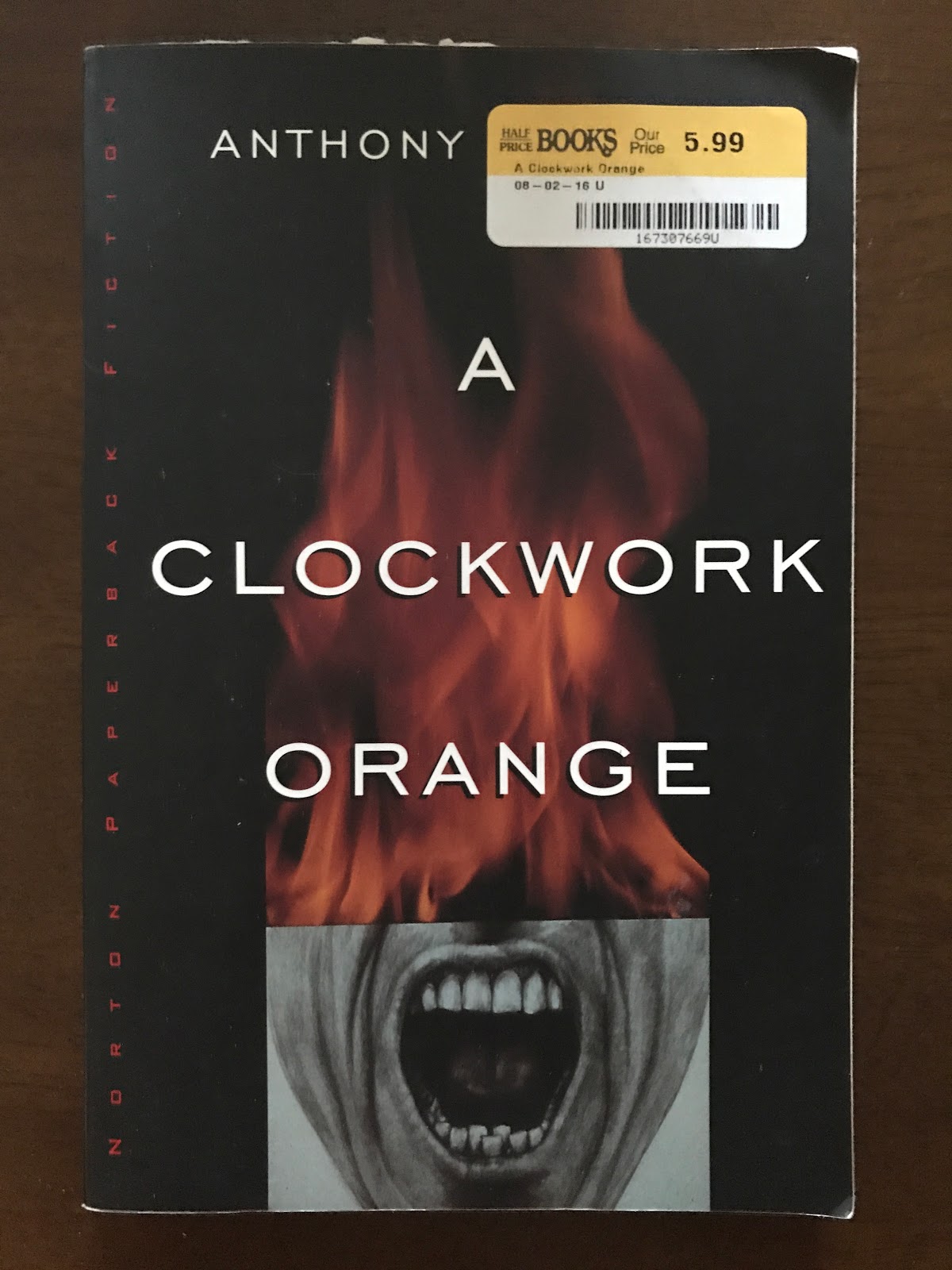
Just finished one of my son’s favorite books, A Clockwork Orange by Anthony Burgess. I recently watched the movie for the first time, and unlike my son, I liked the movie better. It is a pretty faithful adaptation, except the movie doesn’t carry over the final chapter.
The book is written in the first person by “your humble narrator” Alex. Alex is a teenager in a near-future dystopian society where cops are barely keeping lawlessness at bay. Speaking in a language full of slang called “nadsat” (it does take a little while to understand what all the made-up words mean), Alex tells his tale. He and his hoodlum friends spend their nights performing horrendous acts of violence, from beating up the homeless, to breaking-and-entering, to rape. On one such night, Alex ends up killing one of their victims and is arrested, while the others in his troop make their getaway.
In jail, Alex becomes the test subject of a government psychological experiment to rehabilitate. Through a drug program, they make it so Alex becomes ill whenever he even thinks about doing something violent. Just 2 years into his sentence, Alex is released as a new man. His past catches up to him though, as he runs in to many of his previous victims, who can now retaliate against him without fear of Alex fighting back. He eventually ends up back at the home of a woman he raped, who has since killed herself, and her widowed husband recognizes him. The husband sees a way to use Alex’s case to discredit the current reviled government, and forces Alex to commit suicide by jumping out of a window.
Alex survives however, and the government officials swoop in to blame the other party and the doctors that did all this to Alex in the first place. They put Alex back to the way his was, reviving his evil tendencies. Here is where the film ends, with the applied assumption that Alex will revert to his sociopathic ways. The book’s final chapter though shows that Alex has “grown up,” and wants to leave the past and become a man and raise a family. Even without coercion, he no longer wants to do evil.
The novel’s end feels too clean cut for me, and I much prefer the open-ending unknown of the film finale. The book does do a much better job of detailing all the little nuances going on in the background, such as the questions of good vs evil, less in regards to Alex’s actions and more involving the government’s removing of his free will. I like the invented language of nadsat which makes the book seem like an entirely different time and place. Not my favorite book in this book reading adventure, but still a good one.
Solo satisfies but fails to inspire

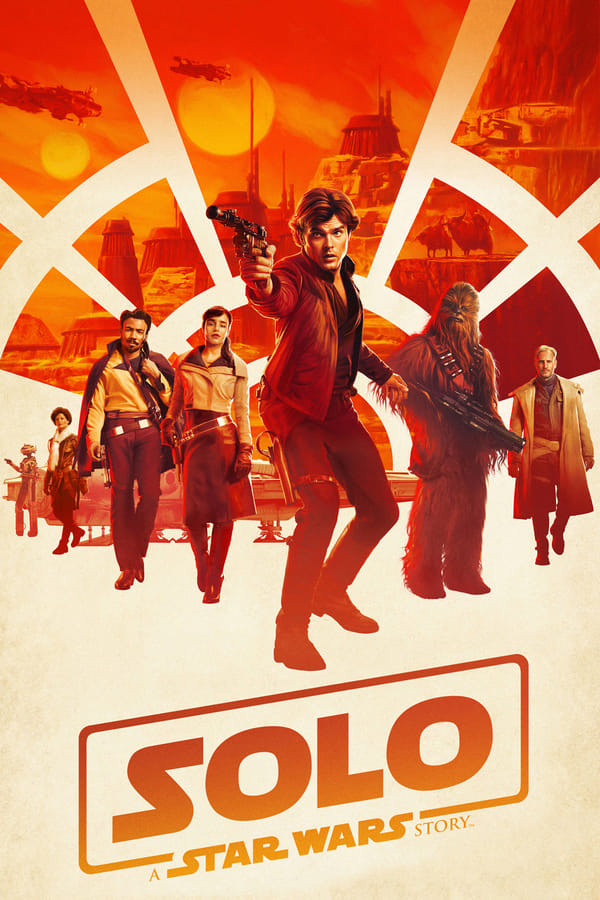
After Rogue One from a couple years ago, Solo is the newest “standalone” Star Wars film to come from the Disney conglomerate. As the name implies, it is the backstory of the beloved Han Solo character. It shows just above everything any Star Wars die-hard fan would want to see. We see his early days on Corellia struggling to even survive, moments that gave him the tough exterior we see later in his life. Solo gets pilot training by the Empire, meets Chewbacca and Lando, and gets his hands on the Millennium Falcon. He also has his first grand adventure, and his first love.
The movie is good, but not great. Don’t get me wrong, I really enjoyed it, and it is jam-packed with easter eggs to satisfy fans of the series (though some are beat on your head to make sure you don’t miss them). But through a good portion of the middle of the movie, I found myself thinking it lacked the magic of all of the Star Wars films to date. Even with its flaws, the prequel trilogy still has the sense of wonder, the feeling of a “galaxy far, far away.” This film, at times, almost seemed like a generic space movie with characters that seem familiar, but different from the heroes we know. Having said that, during the famous Kessel Run that Han is always going on about, when that famous Star Wars music kicks on, I still felt the rush. All in all, a very enjoyable film, but it does lack just a little of the luster we’ve come to expect.

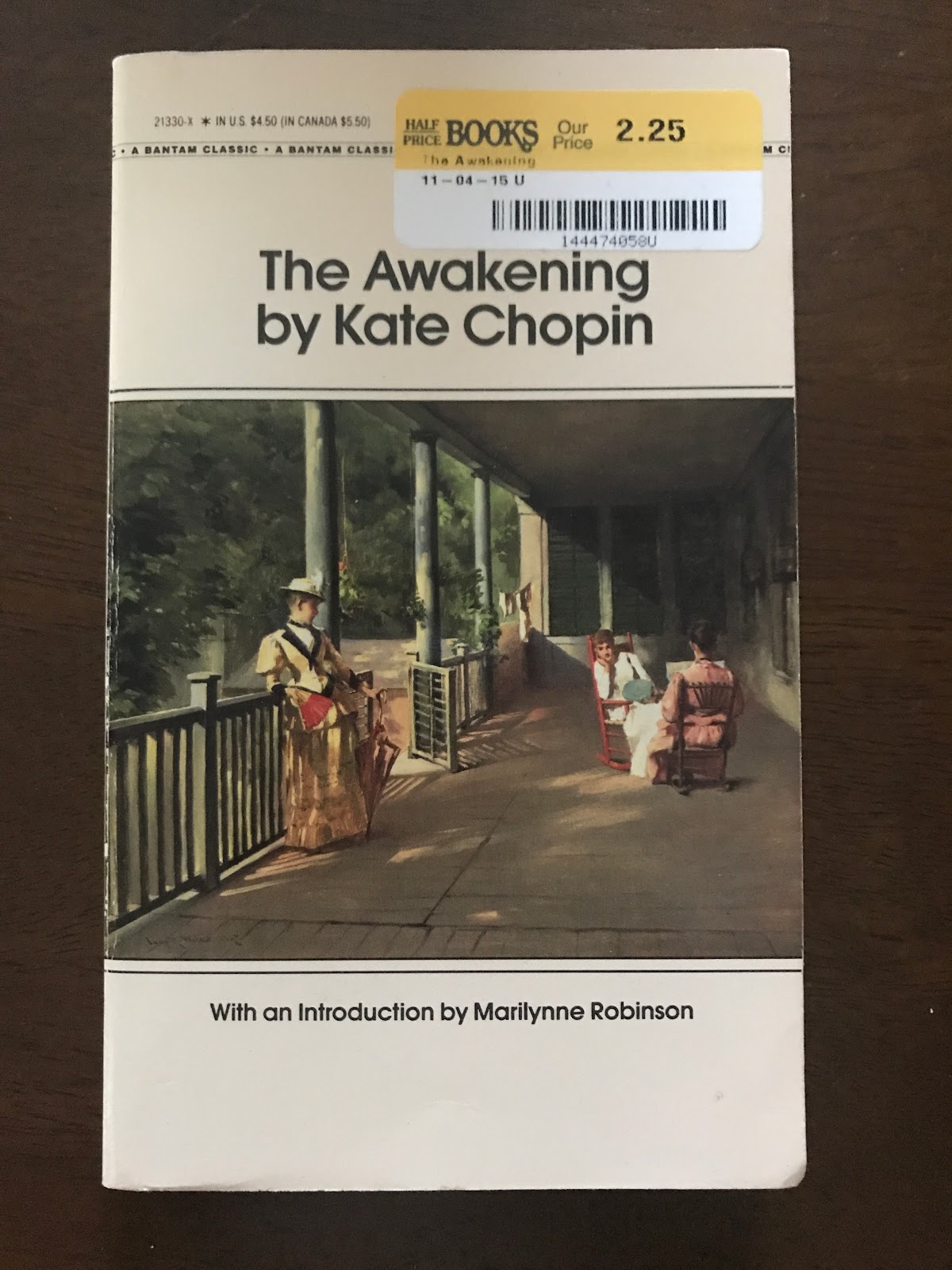
Early 20th Century feminism has an Awakening in Chopin’s classic

The Awakening is a very short novel by Kate Chopin. Censored when it was published in 1899 for its feminism approach, it is now widely regarded as a very important work. It isn’t risque by today’s standards, but it does depict a woman who desires more than just staying home and pleasing her husband.
At the beginning of the book, Edna Pontellier looks like the typical housewife. She is raising 2 kids at home while her husband goes away to work regularly. We soon see though that she is not content with her life, despite social norms telling her this is the way it should be. Younger than her husband Leonce, she is attracted to a much younger man, Robert Lebrun, while on vacation. She seeks him out to spend time together, though makes no brazen advances. She finally has a glimpse at what a powerful, strong-willed woman can be when she meets Mademoiselle Reisz, a pianist, towards the end of the summer vacation.
Upon returning home, Edna sets out to make her life what she wants. Quietly and slowly at first, she starts taking walks by herself around town, not returning house calls by other women of society, and meeting with people she perhaps should not be seen with in public, including the dashing Alcee Arobin who has a poor reputation for sleeping with married women. When Leonce goes out of town for work, Edna drops the kids off with the grandparents for an extended visit, moves out of her family house, and begins a true affair with Alcee, though secretly, she still longs for Robert. Robert had gone away to try to suppress his own desires for Edna, but he does eventually return. Now that Edna has found her voice, she openly solicits Robert, but he confesses that he loves her too much to shame her by sleeping with her as a married woman. Edna cannot live with the rebuff, returning to the vacation isle where it all started, and drowns herself.
Written at a time when women in the USA were having their own “awakening,” this book faced a lot of opposition for showing that women can have sexual desires of their own, as well as for fighting the social norms of the day. Edna’s friends are each very symbolic of different aspects of her life and society in general. Though a short read, it is beautifully written with plenty of deeper meaning to ponder. A very nice little novel.

Quick takes on 5 films

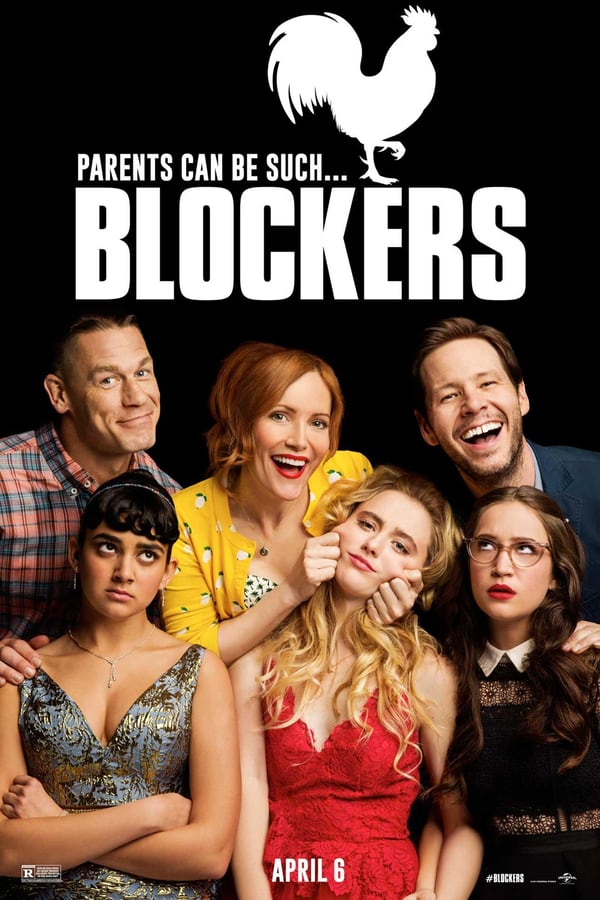
Blockers is totally vulgar, but damn if it isn’t hilarious. Three separate parents have seen their individual daughters grow up as best friends from their first day of school until prom night, and on the day of prom, they find that their girls have made a sex pact to lose their virginity’s that night. So they set out to be c*ckblockers and stop the acts before they go down. In the end it is a bit of a coming-of-age movie from a perspective we don’t usually see (the parents), and everyone involved has some learning to do, even the adults. Though a pretty straight forward comedy (and a great one at that), it doesn’t fail to raise serious questions about gender equality, acceptance (of many kinds), and what it means to be a parent. The good comedies do more than just make you laugh, and Blockers is one such example.


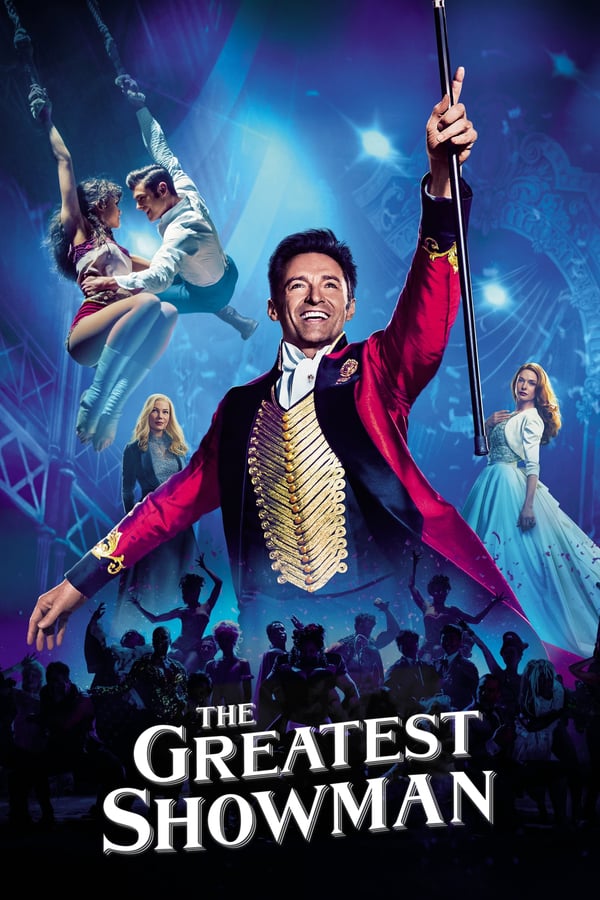
Sometimes you know you will like a movie before you ever watch it, and my recent example is The Greatest Showman. I’m a sucker for musicals, even movie ones, and I’m a big fan of the supremely talented Hugh Jackman, so put it all together and I knew it was going to be up my alley. Jackman plays P.T. Barnum, and the film is about his rise to stardom as he starts his circus and grows it into the draw that it was for so long. It is a little light on depth, and the story is a bit paint-by-numbers without a lot of fleshing out, but the songs are catchy and radio-ready, and the sets and costumes are colorful and gorgeous. A fun movie for fans of the genre, others may not find much to enjoy though.


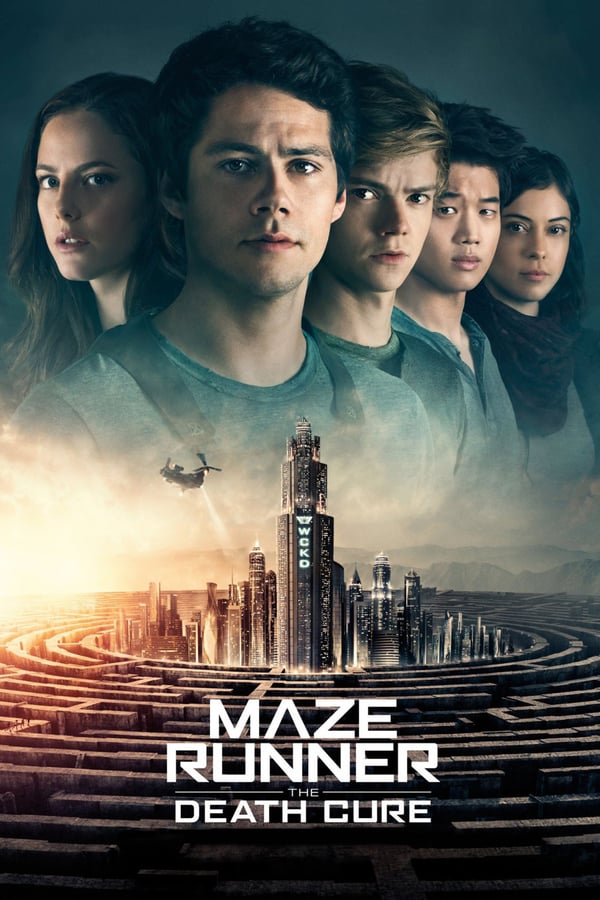
The Death Cure is the finale to the Maze Runner trilogy of films. It didn’t get great reviews, and it doesn’t live up to the suspense and mystery of the first film, but I found it very entertaining, albeit a little campy at times, as many films based on young adult books often are. Light on the mystery but heavy on the action, this film follows Thomas as he and his fellow survivors of an illness that has all but wiped out humanity, in their endeavors to rescue captured friends from a sinister group. The first film in this set, from 2014, was a great thriller with a lot of intrigue, leaving the viewer to guess what all is going on and why, and while the subsequent films lost that element, it is still a satisfying set for fans of the post-apocalyptic genre.


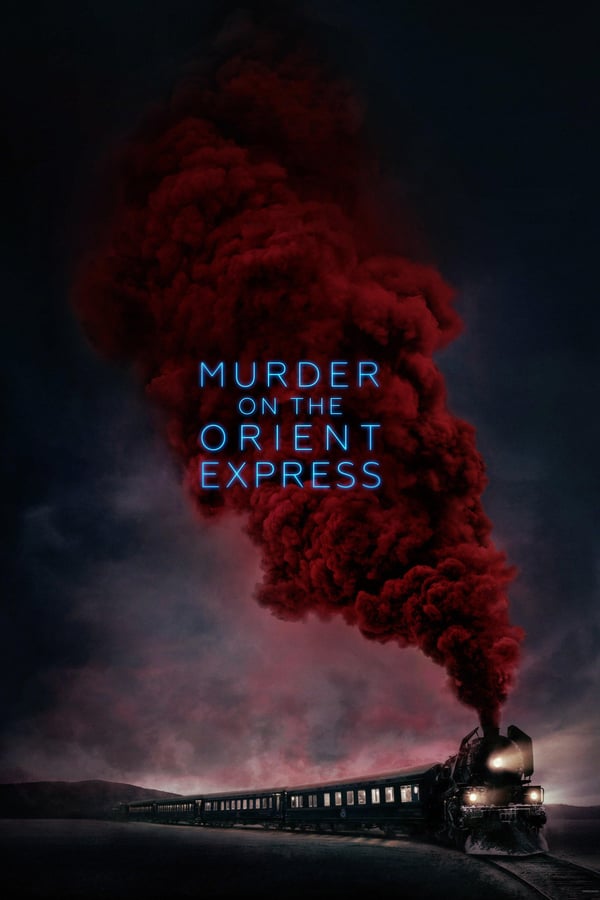
Murder on the Orient Express is a new film based on an old book, and if you’ve never read it, it is basically the film Clue on a train. A high profile passenger is murdered, and the world’s best sleuth, who happens to also be present, sets about to find the killer among his fellows. Beautifully filmed and well acted, it however doesn’t quite get as gripping and edge-of-your-seat thrilling as it maybe hoped. A tremendous cast props it up nicely though, including Johnny Depp, Willem Dafoe, and Judi Dench, with Kenneth Branagh as detective Hercule Poirot, the longtime star of many of Agatha Christie’s mysteries. If Clue had never existed, I might have enjoyed this one more, but that film is far more entertaining with its wildly preposterous cast and ultimately a more satisfying ending.


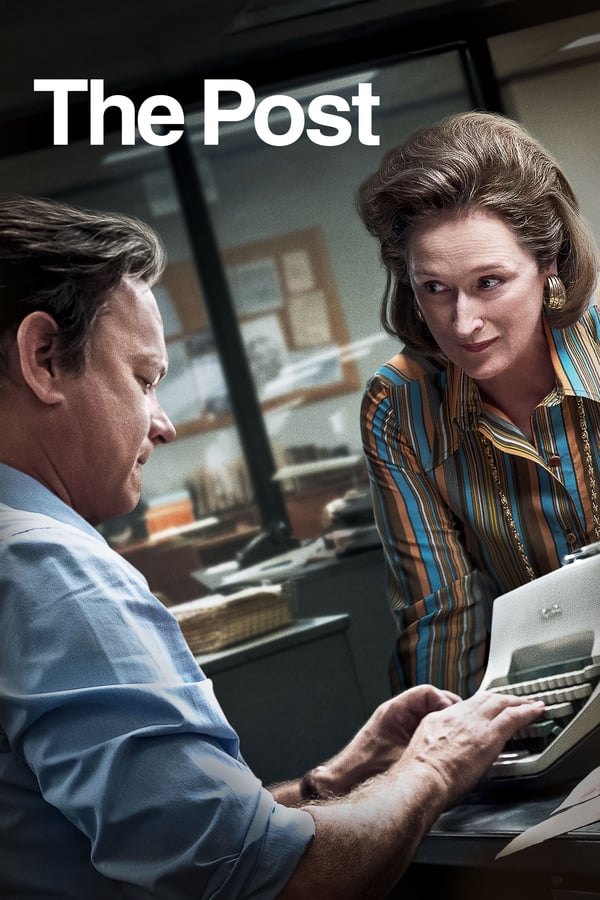
The Post is another one where I can’t quite agree with the professional critics. They heralded this one because it is the kind of film media types eat up, but if you set aside the two engaging leads (Tom Hanks and Meryl Streep), and you are left with a cut and dry, paint-by-numbers historical film that follows just like reading the paper (ironically enough). The true story of the rise of the Washington Post during its coverage of the Pentagon Papers, detailing their reporting of the classified documents of the US involvement in the Vietnam War, it has plenty to be excited about without ever truly being exciting. I can appreciate the historical aspect of it, freedom of the press and all that, especially in today’s age when a politician can scream “fake news” if they don’t like the content (factual or not), but it doesn’t make for a very entertaining film.

Avengers assemble to stave off an Infinity War

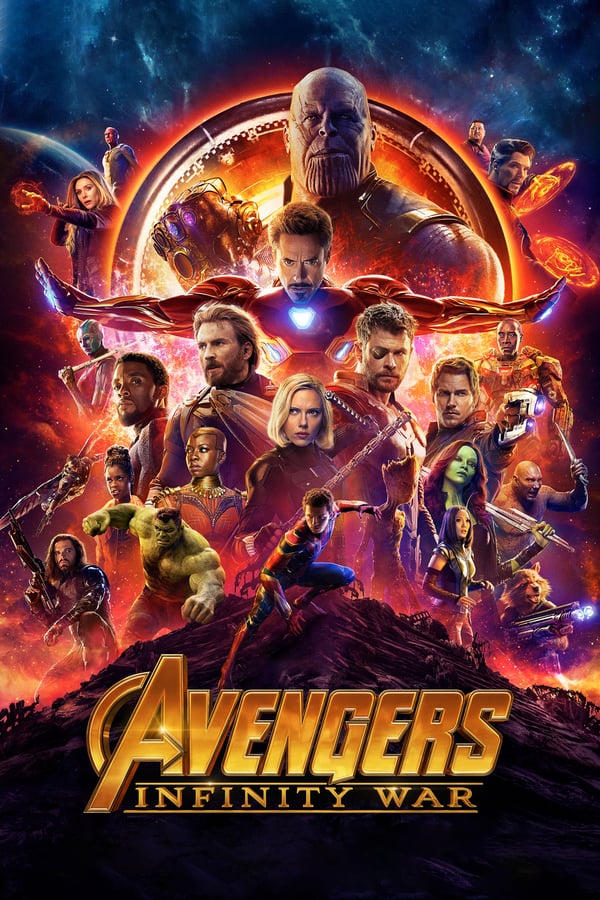
Highly anticipated movies very rarely live up to the hype. Marvel has been building to Avengers: Infinity War for the better part of a decade, and has not shied away from saying this is the moment we’ve been waiting for, doubling down that it would lead to an ultimate conclusion in this run of 19 films (so far). Though they did initially downplay this as a two-parter, Infinity War most certainly does conclude open-ended and ready for next year’s big finale.
To avoid spoilers, all I’ll say is this is the start of the big conclusion all of us fans have been looking forward to. All of the characters introduced so far (with only a couple exceptions which are quickly explained away) are present for the big battle. If there are any qualms, it is that with so many on-screen figures, their individual stories aren’t the focus; instead, we gear up for the ultimate showdown between the Avengers and the evil Thanos, who is set on gathering the Infinity Stones to give him the power to instantly kill half the population of all worlds with the snap of his fingers.
This movie is a roller coaster ride in action and emotion from start to finish. Come ready to be shocked and possibly upset, but trust in what Marvel has done, as they continue to make tremendously enjoyable films.