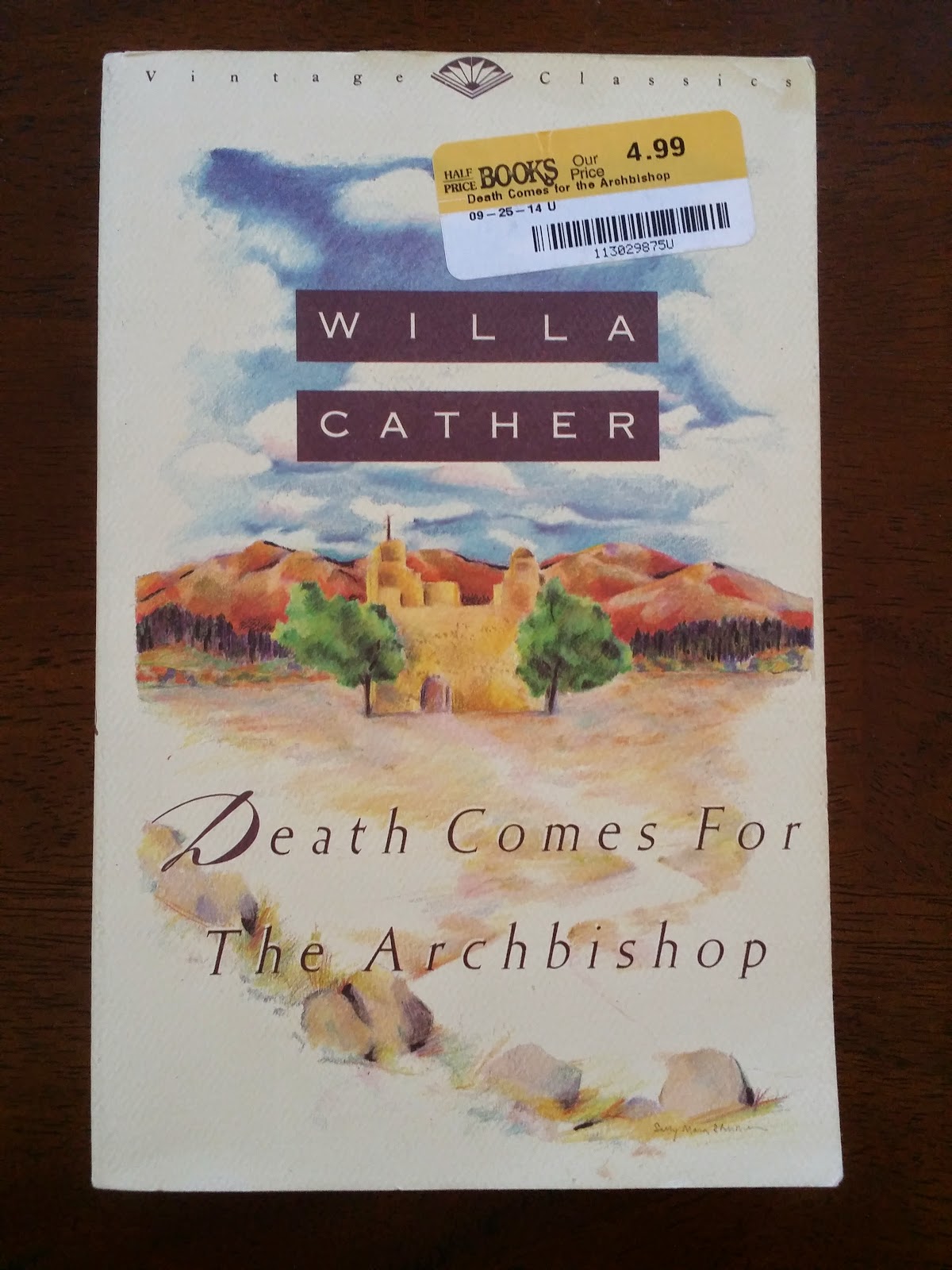
Death Comes for the Archbishop was released in 1927, written by Willa Cather. It tells the story of Father Latour, a missionary who is made a bishop and sent to the newly USA-acquired New Mexico Territory to set up a diocese. He must balance the local Mexican and Indian (primarily Navajo and Hopi) groups, which seem open to God’s word (the Mexican population especially, having passed down Catholic traditions from a couple generations back, from the original Spanish explorers), while facing some opposition from protestant Americans who are increasingly moving to the new territory. He also must fight the entrenched clergy all ready there, who care more for personal gain than the spread of the church. Latour is aided by his longtime friend, Father Vaillant.
The book is spread out over many years, many of which are rushed by in the blink of an eye, while some events are closely examined. Latour makes it his goal to build a true cathedral in Santa Fe, while Vaillant is more for the people, spending most of his time riding out in the surrounding lands to spread God’s word. Vaillant being out so much leads Latour to become very lonely and somewhat more seclusive than he all ready is. Vaillant dies first, and because he has walked so far and made so many friends, his funeral is attended by hundreds, coming from all corners of the territory. Finally as an old man, Latour dies as well. He had a choice to spend his last days in his home in France, but chose to stay in his new country. His funeral is less attended than Vaillant’s, but he is laid out in the cathedral that he was finally able to build.
This book reads almost like a biography, rather than a novel, and is (probably loosely) based on the life of Jean-Baptiste Lamy. There isn’t an over-arching story tying it all together, other than just Latour trying to build a solid foundation for the church in the west. For history buffs, it is an entertaining read, it shows a pretty crisp picture of the daily struggle just to get by when there is nothing around you. It is also a fascinating look at the local groups that inhabited that area, and how they had to weigh this new God with their longtime traditions. It is a shorter book and a quick, very nice read.

 Jons Movie Takes