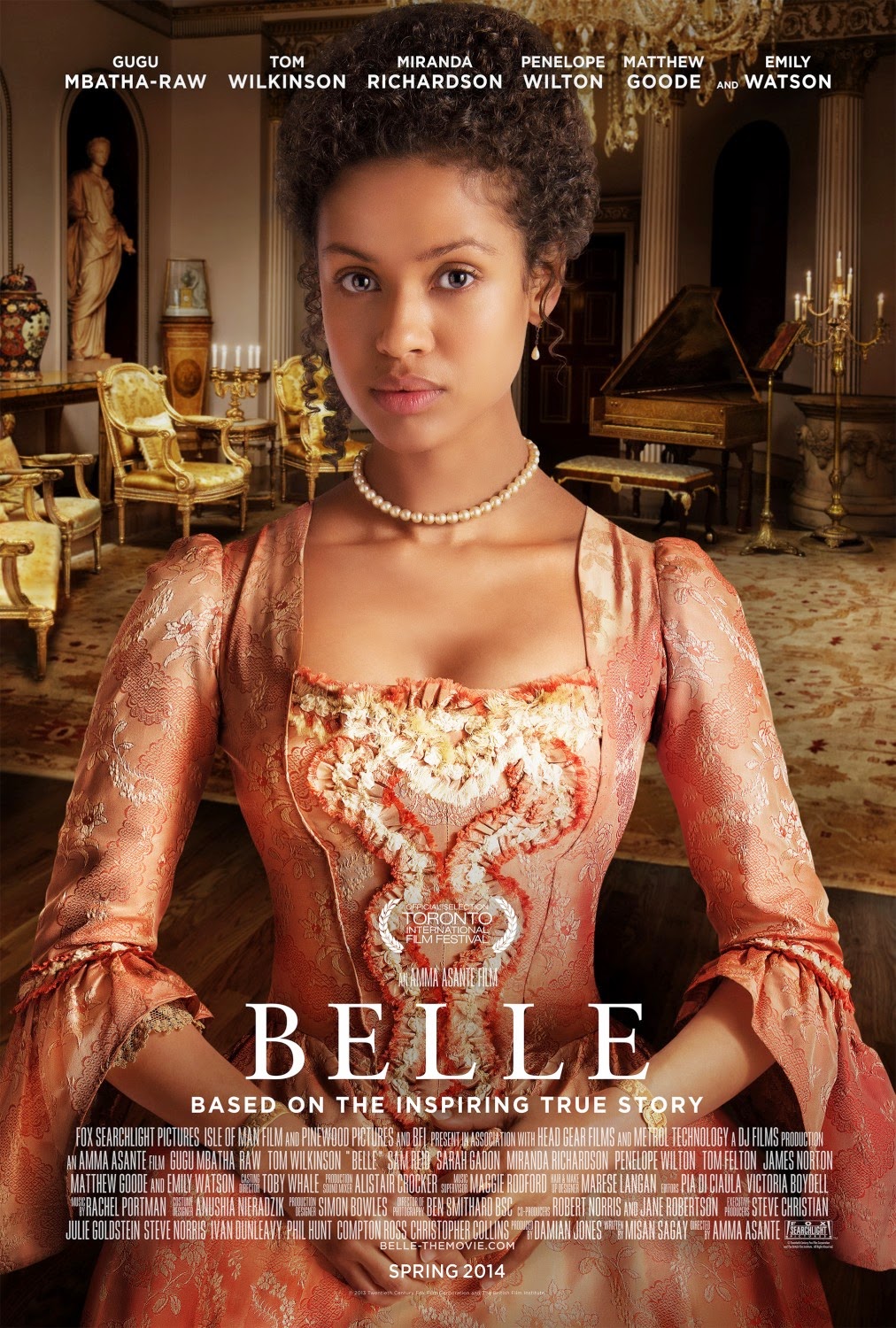
As I’ve said in other reviews, I’m a sucker for based-on-true-story films. Belle is another, though vaguely in this case I believe, and while there are parts to enjoy including some stellar acting by the lead, fairly unknown Gugu Mbatha-Raw, overall it is a pretty wordy period drama.
Mbatha-Raw plays Dido Elizabeth Belle, a child of an African slave and an English naval officer, in the latter half of the 18th century. When her mother dies, Belle’s father brings her to his uncle’s estate to be raised among English high society. The uncle is William Murray, 1st Earl of Mansfield, and a prominent judge. He attempts to raise her as his own, but at every turn she is treated as a second hand citizen due to her race. When she is grown, she faces the very real possibility of not finding a match among the aristocracy of England. She has the wealth to attract suitors, but the “best” are not interested, and her uncle and aunt will not settle for a “lower” match that will bring down her family’s standing in society. The backdrop throughout the film is the uncle’s current trial, in which he must rule on slaves killed during a voyage from the West Indies, whether they are considered people (murder) or lost goods, and thus covered by insurance.
Belle’s life has attracted attention through the years because of a portrait painted featuring her and her cousin (of white European descent) as equals. The portrait is still owned by the current Earl of Mansfield and has been exhibited before. William Murray and his contemporaries are known for sweeping reform in the English law system. How much was due to his household, I’ll leave to the historians. The film’s pace is a little slow, but it never felt long, and history buffs and fans will at least find something to like in Belle.

 Jons Movie Takes